Sourcing a reliable thermal imaging camera for home inspection is complicated by hardware gaps and vendor differences. Most models focus on industrial use or demand direct vendor contact for pricing, which slows quick procurement for technical professionals. This comparison details features, support, and pricing for five thermal cameras so calibration labs and maintenance teams can select the best fit for recurring inspections.
Table of Contents
Multimeter Asia
At a Glance
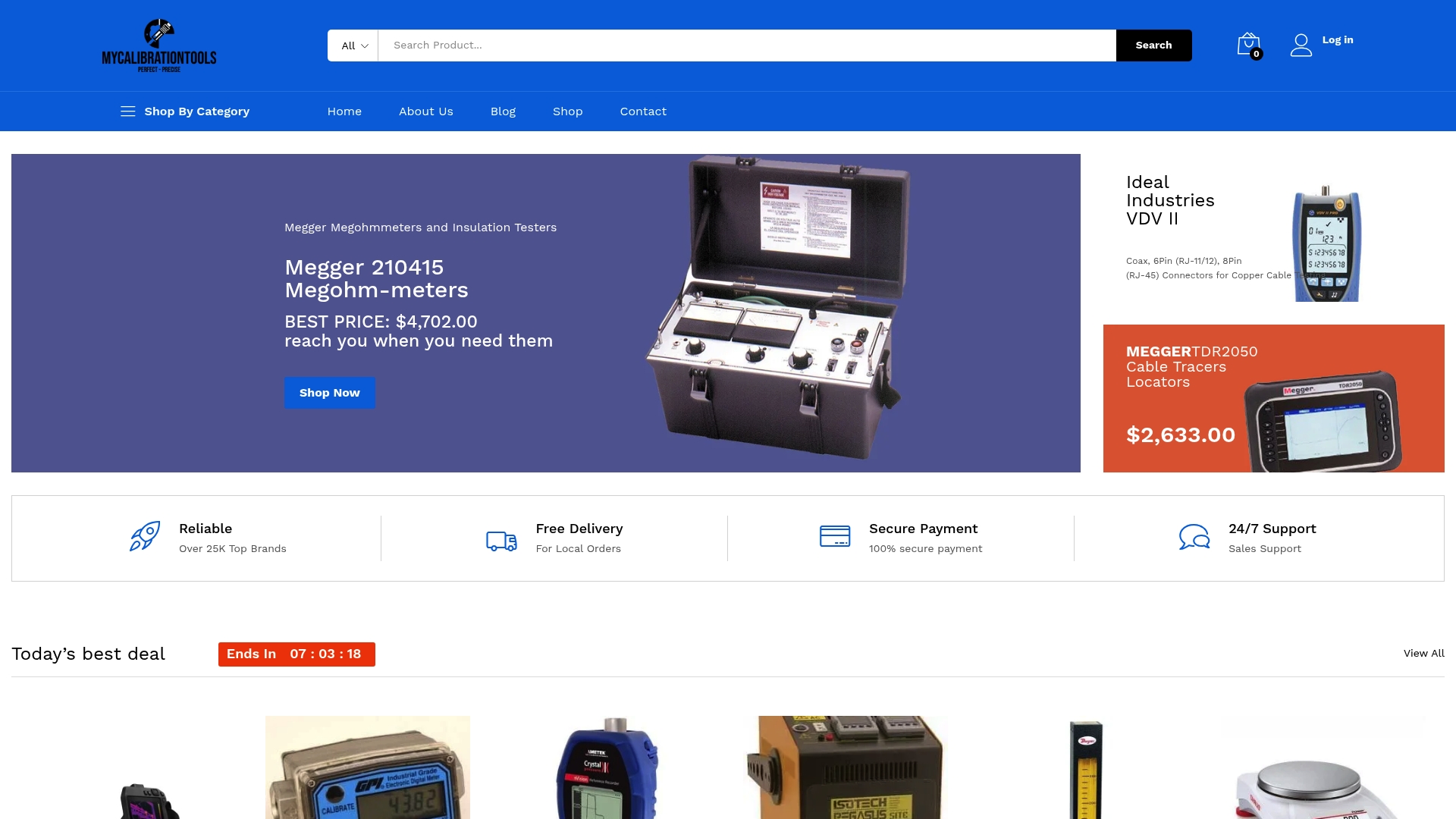
The catalog lists handheld oscilloscopes, thermal cameras, and branded Megger Megohmmeters and insulation testers. The company operates globally from Jakarta and sources products from leading manufacturers. The vendor reports a selection of more than 25,000 top brands, a claim that speaks to breadth.
Core Features
Multimeter Asia groups products across calibration, electrical, environmental, RF, and laboratory testing categories, with clear product pages and technical specifications. Global shipping combines with online ordering and supportive customer service to serve professional buyers. According to the vendor, the site also offers 100% secure payments and 24/7 support.
Key Differentiator
The inventory focus on professional-grade tooling sets this retailer apart. The offering centers on internationally recognized calibration and measurement instruments sourced from top OEMs, which simplifies procurement for technical teams. Technical documents and category organization shorten evaluation time when teams must replace or certify instruments quickly.
Pros
The catalog depth lets calibration labs and maintenance teams find specialized modules and common test meters in one place. Reputable OEM sourcing improves confidence in instrument traceability and long term durability. Global distribution and online ordering reduce lead time for remote sites. Clear categorization and detailed product pages reduce guesswork when matching specs to calibration procedures. The vendor emphasizes industry measurement standards across listings, which helps compliance-focused teams.
Cons
- Primarily online retail with limited physical store presence.
Who It’s For
Calibration labs, industrial maintenance engineers, research teams, and technical professionals who require traceable, high precision instruments will get the most value. Organizations that buy measured quantities of test gear for recurring calibration tasks match this supplier profile. Casual hobbyists and one-off consumers will likely find the selection and pricing geared toward professional budgets.
Unique Value Proposition
That catalog size claim means you can source rare OEM modules alongside mainstream meters without switching vendors. Consolidating purchases reduces vendor management and shortens procurement cycles for maintenance teams. The combination of branded instruments and on-demand technical support makes lifecycle planning for calibrated assets easier.
Real World Use Case
A manufacturing plant orders calibration modules and electrical test instruments online to keep production equipment in tolerance. The plant uses the vendor’s technical assistance during instrument setup and to verify measurement ranges before on-site calibration. Repeat orders reduce configuration time for the maintenance crew.
Pricing
Prices vary widely across categories. Most products range from a few hundred to several thousand USD, reflecting professional grade testing equipment. Competitive pricing and free local delivery are advertised for qualifying orders.
Website: https://multimeterasia.com
Seek Thermal
At a Glance
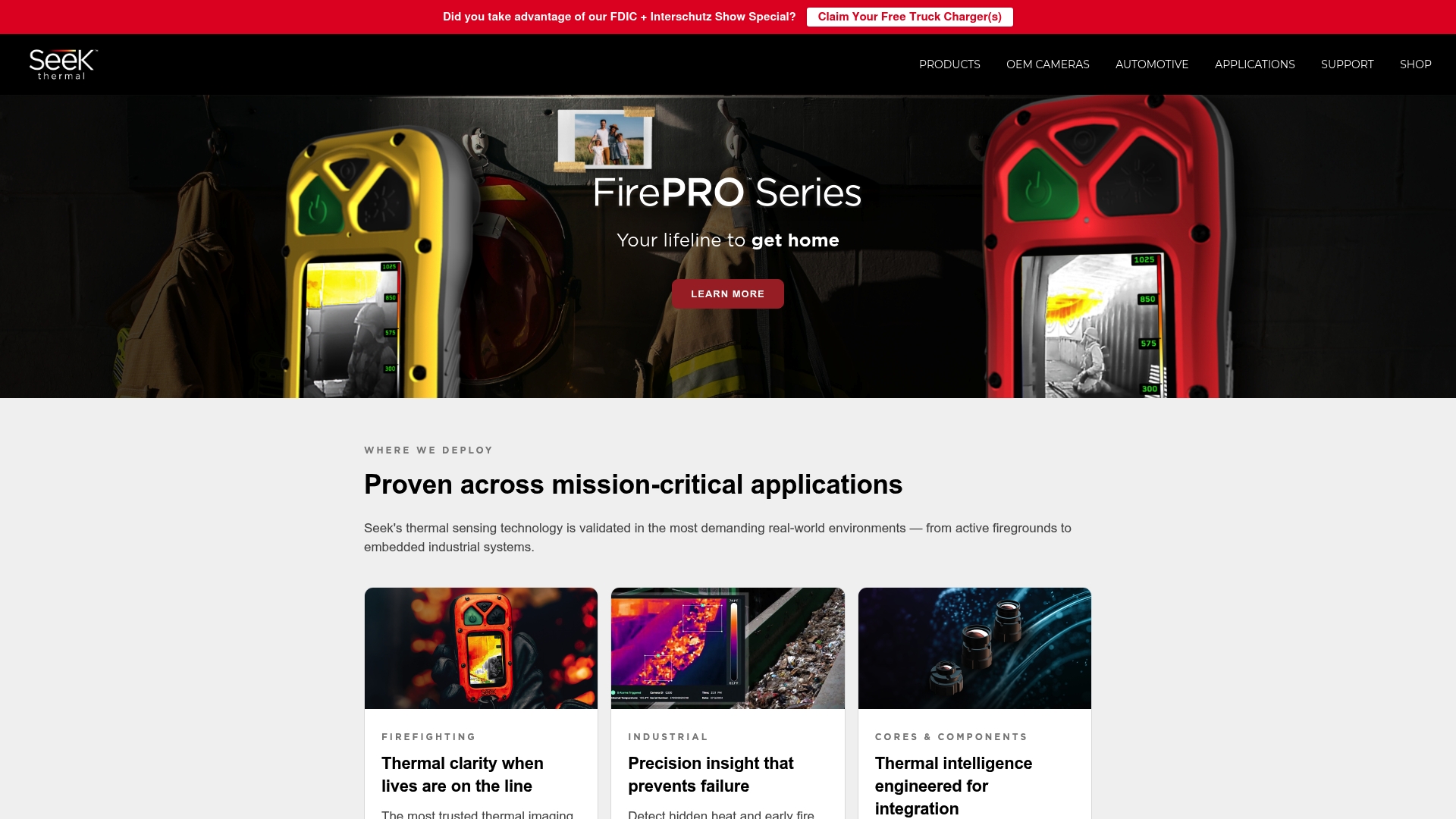
Seek Thermal manufactures its own proprietary sensors from design to final assembly in Santa Barbara, California. That vertical control drives the product range, which spans handheld cameras, fixed monitors, OEM cores, and smartphone attachables. The hardware targets demanding sites with rugged, IP67 rated housings that hold up in rough field use.
Core Features
Seek Thermal pairs in-house sensor design with a broad product lineup so customers can choose handheld, fixed monitoring, or OEM modules that match their workflow. The cameras implement advanced imaging, including mixed-gain imaging, to retain detail across high-contrast scenes. Rugged enclosures and scalable integration options support fire, industrial maintenance, security, and OEM applications.
Key Differentiator
Seek Thermal’s core advantage is its vertical integration from sensor engineering through manufacturing. That control lets the company tune sensor performance to specific product classes and keep component choices aligned with durability and cost targets. For professionals who require predictable supply and consistent imaging behavior across models, that manufacturing alignment matters.
Pros
In-house sensor expertise produces consistent thermal sensitivity across multiple product lines, which helps technicians interpret images without constant recalibration. The product lineup covers handheld inspection, fixed site monitoring, and OEM cores, so teams can standardize on one vendor for both portable and embedded use. U.S. domestic design and manufacturing support tighter quality control and timelier firmware updates for deployed systems.
Cons
- Pricing sits above bargain consumer options, which can put small teams on a tight budget.
- The catalog focuses on industrial and safety markets rather than casual consumer retail, limiting simple consumer-ready models.
- Regional product availability and support vary by market, which may delay replacements or training in some areas.
- OEM modules require integration knowledge, adding overhead for teams without embedded systems experience.
When It May Not Fit
Seek Thermal is not the best choice for hobbyists who want an inexpensive phone add-on for occasional use. Small firms with strict budgets may find the entry price prohibitive for broad deployment. Organizations that need turnkey consumer-style apps and retail support will likely prefer a vendor focused on consumer sales. Teams without systems engineers should plan for integration time when adopting OEM cores.
Who It’s For
The line fits safety officers, industrial maintenance teams, OEM manufacturers, search and rescue squads, and law enforcement units that need durable, repeatable thermal imaging. Buyers who value controlled sensor performance and product traceability will find the portfolio aligned with operational and procurement needs. Those users typically require field-hardened hardware and predictable supply.
Real World Use Case
A fire department equips crews with Seek Thermal FirePRO cameras for interior search and hotspot mapping. Personnel use handheld units to locate victims in low-visibility conditions while fixed Seek Guardian monitors provide continuous thermal trend data at high-risk industrial sites. That combination shortens scene assessment and supports post-incident analysis.
Pricing
Prices begin near $699 for entry handheld models and rise to over $4,700 for advanced models. The vendor advertises premium models that include NFPA certified options. OEM cores and modules are quoted by specification and volume, and certain orders qualify for free shipping, trade-in discounts, or bulk purchase pricing.
Website: https://thermal.com
Flir
At a Glance
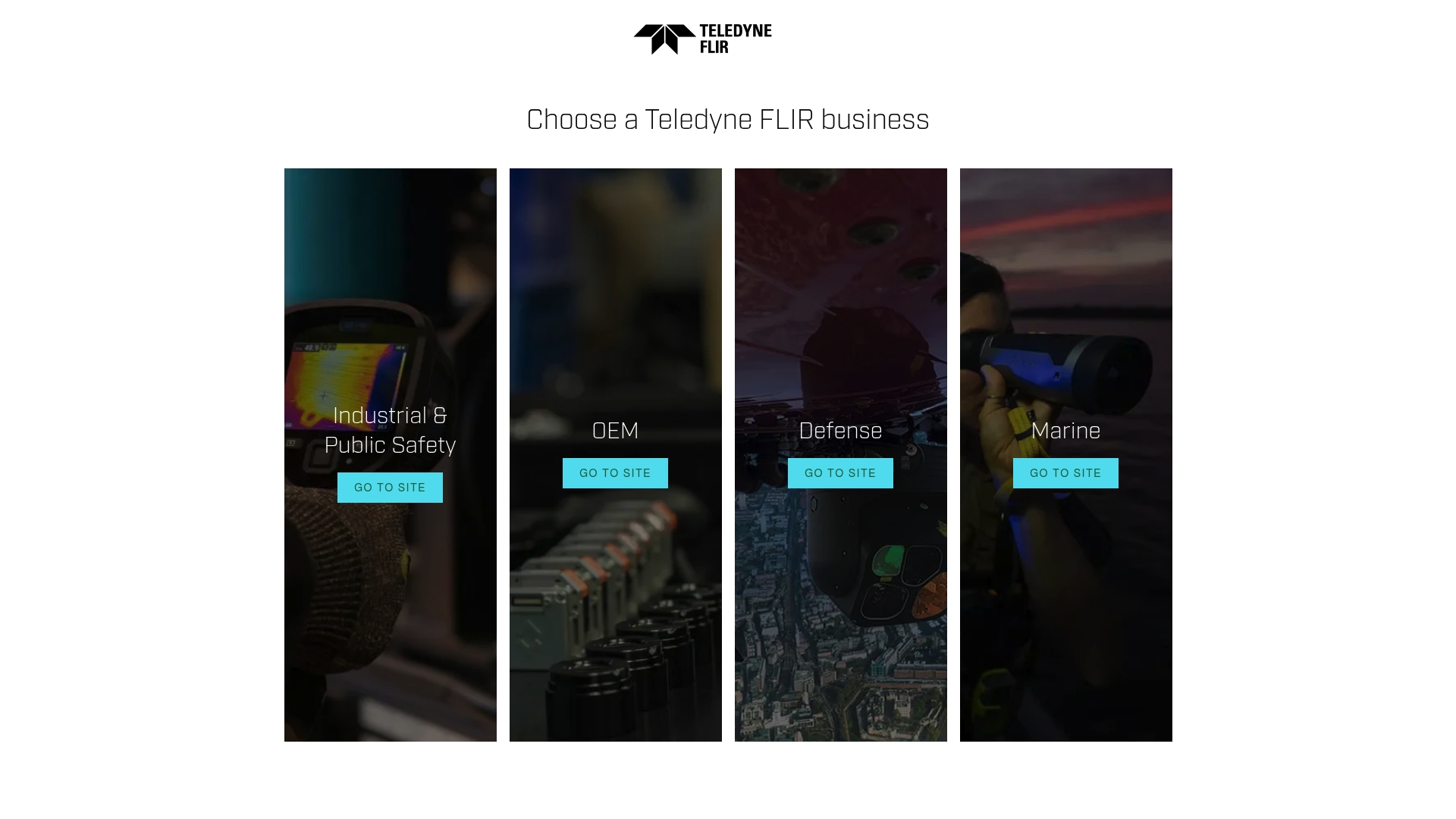
Flir reports over 60 years of infrared innovation. The company maintains a broad portfolio that spans industrial, public safety, defense, marine, and scientific imaging. Flir pairs its product range with in house engineering, manufacturing, and regional service centers.
Core Features
Flir offers thermal imaging and visible light sensing hardware across handheld, mounted, and system scale formats, plus acoustic sensing options. The product line pairs in house manufacturing with warranty, calibration, maintenance, repair, and training services. Localized support and regional service centers back field deployments for long term operations.
Key Differentiator
Flir’s long tenure and its in house engineering and manufacturing set it apart from vendors that assemble third party modules. That combination lets the company control quality across camera sensors, optics, and electronics while offering tailored solutions for public safety, industrial maintenance, or research labs.
Pros
Flir’s depth of experience makes its cameras familiar to first responders and maintenance teams. That experience supports a wide selection of models for handheld inspections, fixed monitoring, and scientific imaging that cover many inspection profiles. In house manufacturing and strict quality control reduce variability between units, and regional service centers plus complete support services help with calibration, repair, and operator training.
Cons
Product selection can be complex for new buyers who need only a simple handheld inspection camera.
Premium pricing places many advanced and industrial systems outside the budgets of small contractors or DIY homeowners.
Some specialized systems require extended training or on site support before they deliver reliable results.
When It May Not Fit
Small independent inspectors and budget conscious homeowners will likely find Flir’s advanced systems excessive. Projects that only need a basic handheld unit or a consumer grade camera may be better served by simpler, lower cost tools. Buyers who need plug and play simplicity with minimal training will face additional time and cost with complex configurations.
Who It’s For
Flir fits organizations and professionals who require durable, accurate thermal and sensing systems for critical work. Typical buyers include first responders, industrial maintenance teams, government safety agencies, and research institutions that need long term service, calibration, and model variety. Enterprises that plan recurring use and scheduled calibration get the most value.
Real World Use Case
A manufacturing plant installs Flir thermal imaging on key equipment to monitor bearing and motor temperature in real time. The maintenance team receives calibration and training from Flir and schedules preventative repairs when readings drift. That setup reduced unexpected downtime and supported compliance with internal safety protocols.
Pricing
Pricing varies by category, from portable handheld cameras to large industrial or military grade systems. Costs commonly start at a few thousand dollars for portable devices and can reach tens of thousands for high end industrial systems. Discounts, service packages, warranties, and calibration plans are available through consultation with Flir representatives.
Website: https://flir.com
Ulirvision
At a Glance
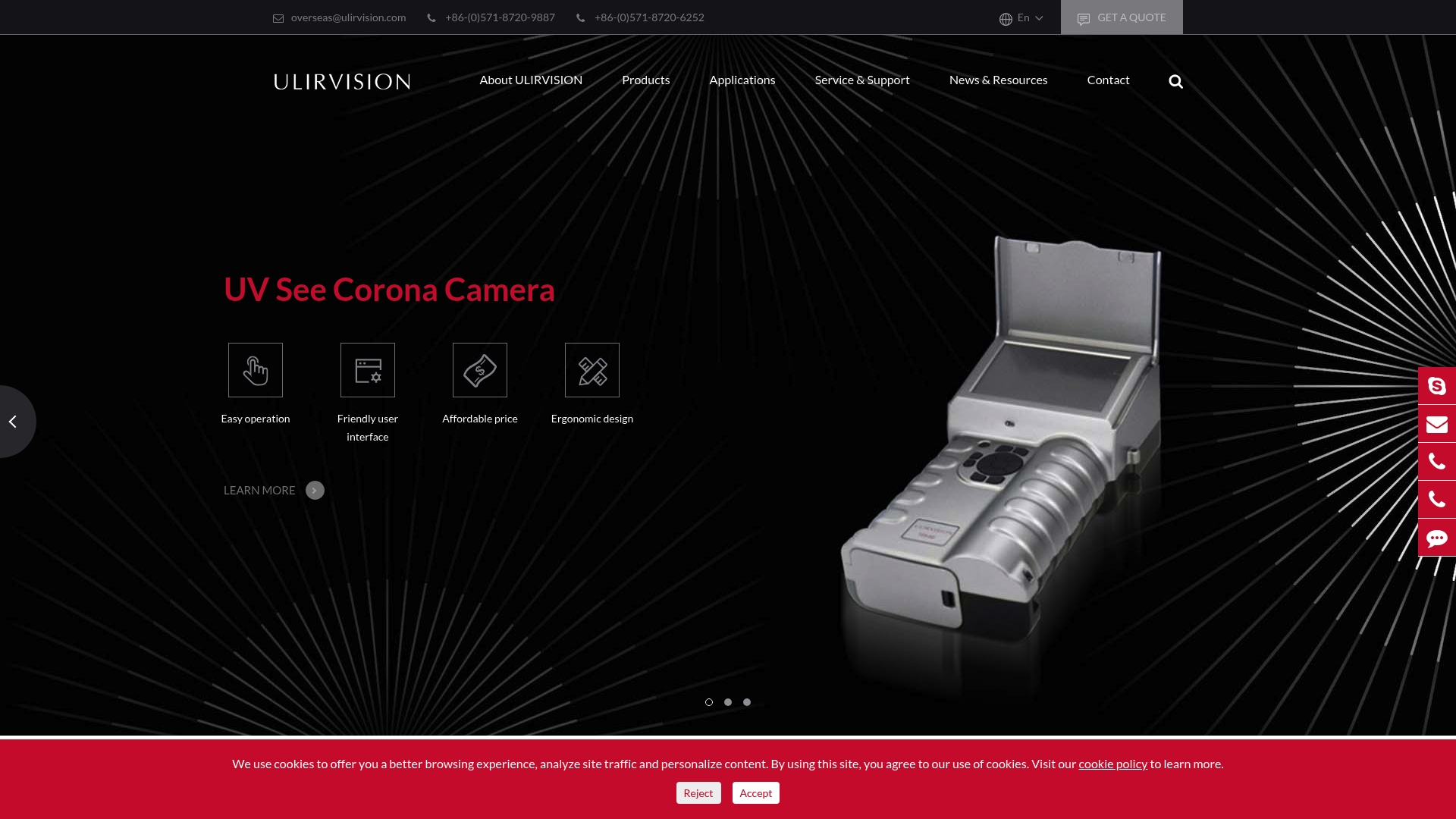
Ulirvision reports more than 100,000 units delivered to over 100 countries. The vendor also claims a patent portfolio exceeding 100 patents. The company dates back to 2005 and focuses on infrared thermal, ultraviolet, gas, and acoustic imaging for industrial safety. These scale signals explain why many utility and petrochemical operators evaluate its gear.
Core Features
Ulirvision ships a diverse lineup covering thermal imaging, ultraviolet corona cameras, gas leak detectors, acoustic imaging, and modular thermal cores, all aimed at industrial workflows. Devices pair rugged enclosures with interfaces designed for field technicians and come with technical training and after-sales support. Global distribution and formal training programs let operations integrate the devices into regular maintenance and security routines.
Key Differentiator
Ulirvision’s long R&D history and the vendor patent claim set it apart in industrial imaging. That claim underpins specialized sensor designs and firmware choices targeted at electric power, petrochemical, and defense use cases. The result is product families built around field reliability and task-specific measurement modes rather than consumer convenience.
Pros
Ulirvision delivers high-performance thermal and UV imaging hardware built for industrial duty. The company pairs product families with global technical support and formal training, which reduces ramp time for maintenance teams. Its long operating history means product lines and accessories are mature, and distributors are available in many regions.
Cons
Primarily designed for professional and industrial markets. This makes consumer-grade ease of use limited.
Product pricing may be premium, reflecting high-end optics and industrial certification costs.
Procurement and customization often require direct vendor engagement, which can slow small purchases.
When It May Not Fit
This offering is not a good match for hobbyists or homeowners who need a simple pocket camera. Small contractors with tight budgets may find the procurement and pricing model excessive. Organizations needing plug-and-play consumer features or smartphone-first apps will want a different vendor.
Who It’s For
Ulirvision targets industrial professionals, facility managers, security teams, and defense organizations that need durable imaging for safety and monitoring. Ideal buyers run scheduled predictive maintenance, manage critical infrastructure, or require gas detection integrated with inspection workflows. Teams that value vendor training and regional distribution will extract the most value.
Real World Use Case
A power plant uses Ulirvision thermal cameras to inspect transformers and switchgear during routine rounds. Maintenance staff receive vendor training and then log hotspot locations for repair crews. The equipment helps the plant detect abnormal heat patterns before failures and ties into the plant’s predictive maintenance schedule.
Pricing
Ulirvision uses customized quotations based on model, sensors, and optional services. Typical product prices range from several thousand to tens of thousands of USD depending on complexity, with bulk and government contract terms available. Prospective buyers must contact the vendor for a formal quote and configuration details.
Website: https://ulirvisiontech.com
Planck Vision Systems
At a Glance
Planck Vision Systems includes a robotic inspection system called TRX 600 for automated thermal inspections. The company pairs advanced thermal cameras with smart sensors and analytics aimed at industrial monitoring. Public documentation and pricing detail are limited on the website, so direct contact is required for specifications and quotes.
Core Features
Planck Vision Systems combines advanced thermal cameras with smart sensors integrated with analytics to deliver continuous monitoring and risk detection across industrial sites. The product line also includes industry-specific monitoring solutions, customizable thermal imaging applications, and robotic inspection equipment such as the TRX 600 for automated routes.
Key Differentiator
The defining feature is the tight integration of sensors, analytics, and robotic inspection systems into one solution set. That design lets facilities combine automated inspections with real-time analytics for faster fault detection and targeted maintenance. The vendor positions this integration specifically for industrial safety and operational efficiency.
Pros
Planck Vision Systems offers thermal imaging technology tailored to industrial environments, with a clear focus on safety and reduced downtime. The combination of smart sensors and analytics supports continuous monitoring and actionable alerts, while robotic inspection hardware enables repeatable, unattended checks. The company advertises affordability alongside practical deployment options for facilities that need automation and targeted thermal diagnostics.
Cons
- Limited online product detail. The website lacks detailed specs and clear documentation, which makes technical comparisons difficult.
- No public pricing or catalog. Potential buyers must contact the company for quotes and configuration options.
- Website reliability issues. Missing pages may hinder initial evaluation and slow procurement.
- Installation complexity. The systems may require technical expertise for calibration and integration.
When It May Not Fit
Organizations that need immediate, off-the-shelf specifications from a public catalog will find the current web presence inadequate. Small teams without access to electrical or controls engineers may struggle with installation and calibration. Facilities that require transparent pricing online before vendor contact should look elsewhere.
Who It’s For
Industrial facility managers, safety officers, and maintenance engineers seeking an integrated thermal monitoring solution will find the offering relevant. The product suits sites that plan to deploy automated inspection routes or build analytics-driven maintenance workflows. Buyers who can coordinate vendor-led installation and customization will realize the most benefit.
Real World Use Case
A manufacturing plant installs Planck Vision cameras and the TRX 600 to monitor bearings, motors, and heat exchangers on a 24/7 schedule. The robotic inspection system runs nightly patrols while analytics flag temperature trends for the maintenance team. That configuration reduces unplanned stoppages by identifying thermal anomalies before failures.
Pricing
Pricing information is not publicly available. The company asks potential clients to contact them for quotes and configuration pricing based on site requirements.
Website: https://planckvisionsystems.com
Comparison of alternatives
For professionals exploring thermal imaging solutions for various applications, balancing versatility and operational support reflects the critical decision metrics. Below, the comparative analysis highlights strengths and scenarios suited to several offerings alongside Multimeter Asia.
Inventory Scope and Accessibility
Multimeter Asia distinguishes itself with a vast inventory, featuring over 25,000 products, including advanced thermal cameras, calibration modules, and specialized meters. This consolidated catalog helps teams requiring diverse instrumentation reduce procurement complexity. However, Seek Thermal’s vertically integrated design ensures tailored component consistency across proprietary sensors—an advantage for users prioritizing imaging uniformity.
Durability and Field Use
Seek Thermal earns recognition for its rugged camera housings rated IP67, suitable for challenging environments. This focus on durability supports industrial maintenance teams in harsh conditions. Flir, meanwhile, enhances operational resilience by offering regional service centers for on-demand hardware calibration and operator training, catering to geographically distributed enterprises. While Ulirvision emphasizes tailored imaging technology for petrochemical and electric-focused clients, its systems demand expertise for implementation.
Best fit
- Professionals searching for a centralized sourcing platform with varied product categories will find Multimeter Asia the most practical choice.
- Industrial maintenance teams needing high durability for harsh environments should select Seek Thermal with its IP67-rated options.
- Teams requiring localized calibration support and long-term servicing might consider Flir for its established service centers.
- Buyers prioritizing integrated analytics with robotic inspection systems will realize maximum value from Planck Vision Systems.
Our pick
For teams valuing an extensive inventory paired with streamlined procurement, Multimeter Asia remains a standout choice. Its broad catalog allows practitioners to find specialized tools and mainstream meters without vendor-switching complications. That said, organizations focusing exclusively on rugged hardware or integrated analytics could find alternate offerings better suited to thematic needs.
Choosing the best professional-grade imaging tool depends on aligning product features with specific operational requirements.
| Product | Core feature | Key differentiator | Best for | Pricing | Notable limitation |
|---|---|---|---|---|---|
| Multimeter Asia | Comprehensive selection of measurement tools | Focus on professional-grade tooling | Calibration labs and maintenance | Price not published | Predominantly online retail without physical stores |
| Seek Thermal | Advanced imaging hardware for inspections | Vertical integration and proprietary sensors | Safety and maintenance teams | From $699 to $4,700 | High entry price limits budget allocations |
| Flir | Wide range of validated thermal solutions | Experience and regional services | Critical safety and research labs | Tens of thousands | Advanced systems may exceed small-team budgets |
| Ulirvision | Industrial-grade thermal imaging | Specialized industrial applications | Facility management and maintenance | Several thousand | High entry cost and vendor engagement required |
| Planck Vision Systems | Smart sensors with automated analytics integration | Robotics-centric workflows | Automated inspection in facilities | Price not published | Minimal online specs and high installation complexity |
Challenges Home Inspectors Face With Thermal Cameras and How Multimeter Asia Supports Precision
Home inspectors seeking a reliable thermal camera must manage challenges like matching measurement range and tolerance levels to specific inspection tasks. Finding equipment that combines accuracy with ease of use often proves difficult. Multimeter Asia addresses these key concerns by offering professional-grade thermal cameras alongside precise calibration tools. Their extensive portfolio ensures that industrial maintenance engineers and technical teams can source both thermal cameras and calibration equipment without switching vendors.
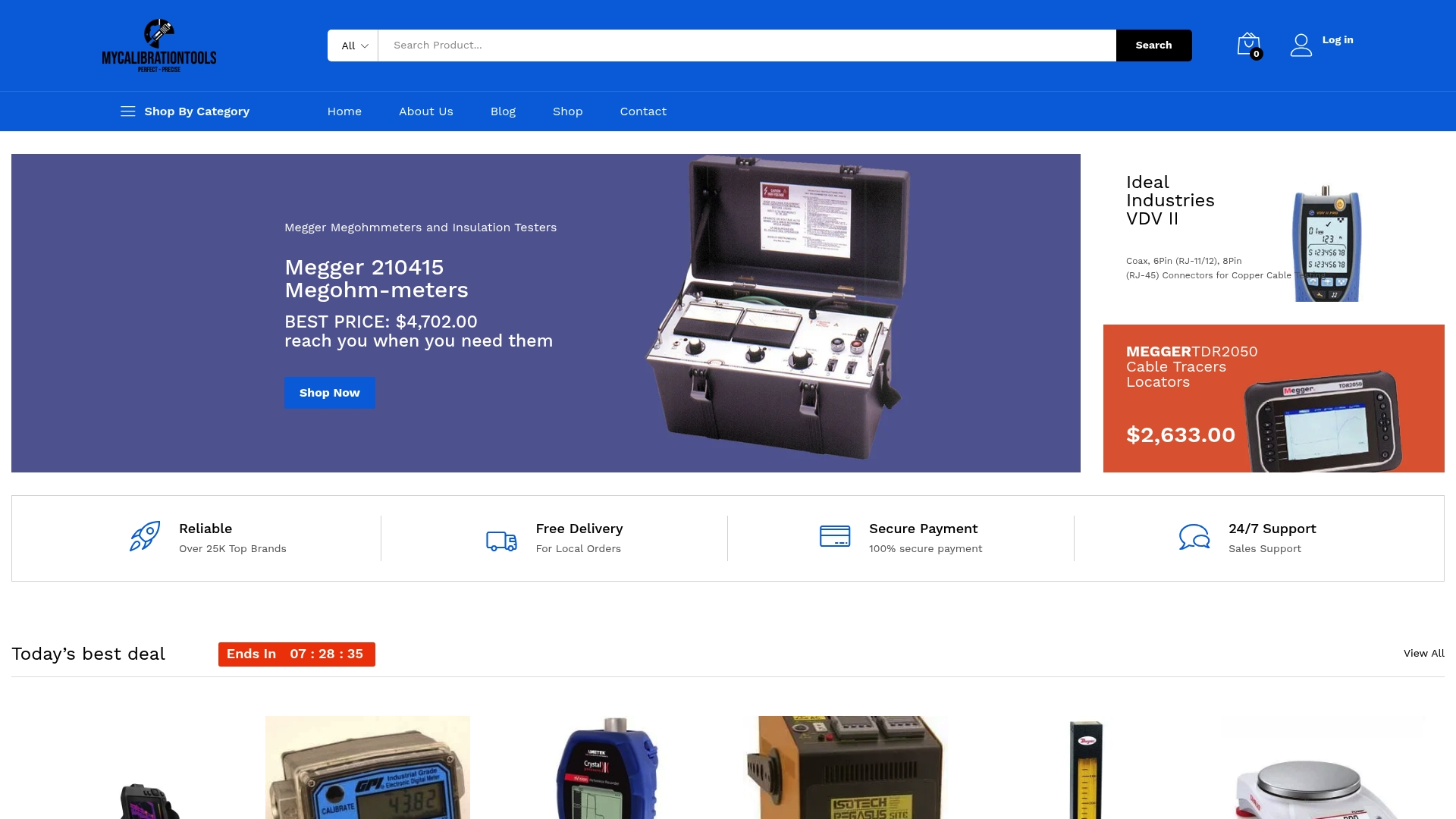
Explore Multimeter Asia for a trusted selection of thermal cameras backed by detailed technical data and secure online ordering. Take the next step by securing equipment that supports reliable measurements and improves operational efficiency across your home inspection tasks.
FAQ
What types of thermal cameras does Multimeter Asia offer for home inspection?
Multimeter Asia provides a wide variety of thermal imaging cameras tailored for home inspection applications. Their catalog features items from leading manufacturers, ensuring both quality and reliability for users who need accurate thermal assessments.
How does Multimeter Asia compare to Seek Thermal for home inspection needs?
Seek Thermal designs proprietary sensors for its thermal cameras, delivering rugged options for industrial applications. In contrast, Multimeter Asia focuses on a diverse range of offerings suitable for home inspections and professional applications, allowing for easier access to the specific tools needed for residential evaluation.
What is the pricing range of thermal cameras available through Multimeter Asia?
Prices for thermal cameras from Multimeter Asia typically range from a few hundred to several thousand dollars, reflecting the quality and precision of their devices. This pricing structure allows various types of buyers to select a camera that meets their specific inspection needs and budgets.
Can I use thermal cameras from Multimeter Asia for a variety of inspection scenarios?
Yes, thermal cameras offered by Multimeter Asia are versatile for various inspection scenarios, including home evaluations, safety assessments, and building diagnostics. This flexibility enables users to apply these tools across different situations effectively.
Does Multimeter Asia provide customer support for product inquiries?
Multimeter Asia offers supportive customer service, ensuring that users receive assistance with any product-related questions or concerns. This commitment to support helps users feel confident in their purchases and operational use.
Recommended
- FLIR T840 High-Performance Thermal Camera –
- FLIR T865 24 + 42 – Multimeter Asia
- FLIR T860-42-NIST – Multimeter Asia
- Fluke Ti27 VIP2 – Multimeter Asia
Article generated by BabyLoveGrowth