Posted on

Top 5 Fluke T5 1000 vs T5 600 Marketplaces 2026

Technician comparing two Fluke multimeters on workbench

Locating alternatives to Fluke T5 1000 and T5 600 electrical test equipment that fit professional requirements often means searching across scattered online sources. Many marketplaces restrict inventory to entry-level tools or lack calibration, training, and technical support for demanding operations. This list covers five vendor platforms so technicians and engineers can identify suppliers that meet traceability, service, and documentation needs.

Table of Contents

Multimeter Asia

https://multimeterasia.com

At a Glance

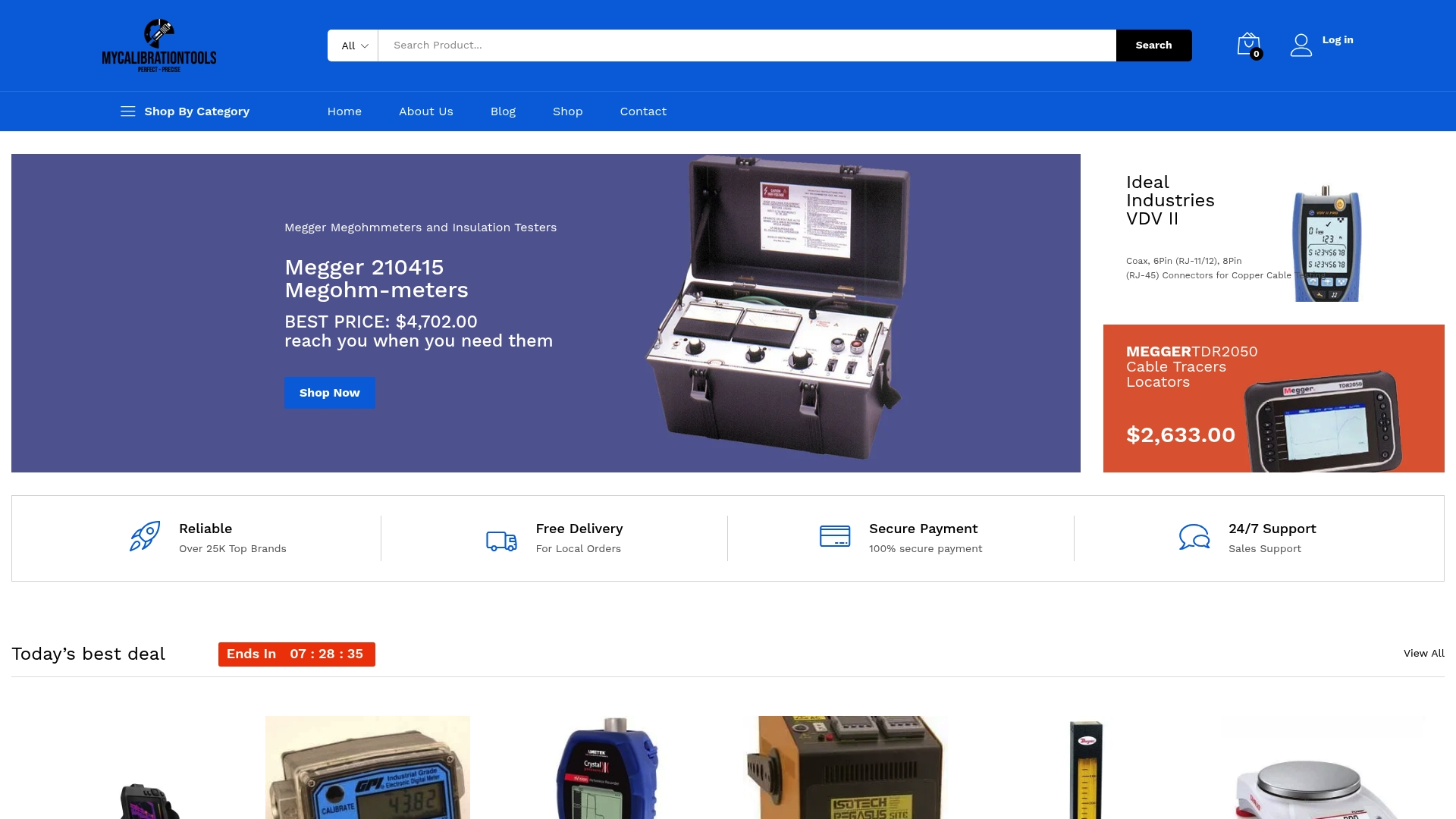
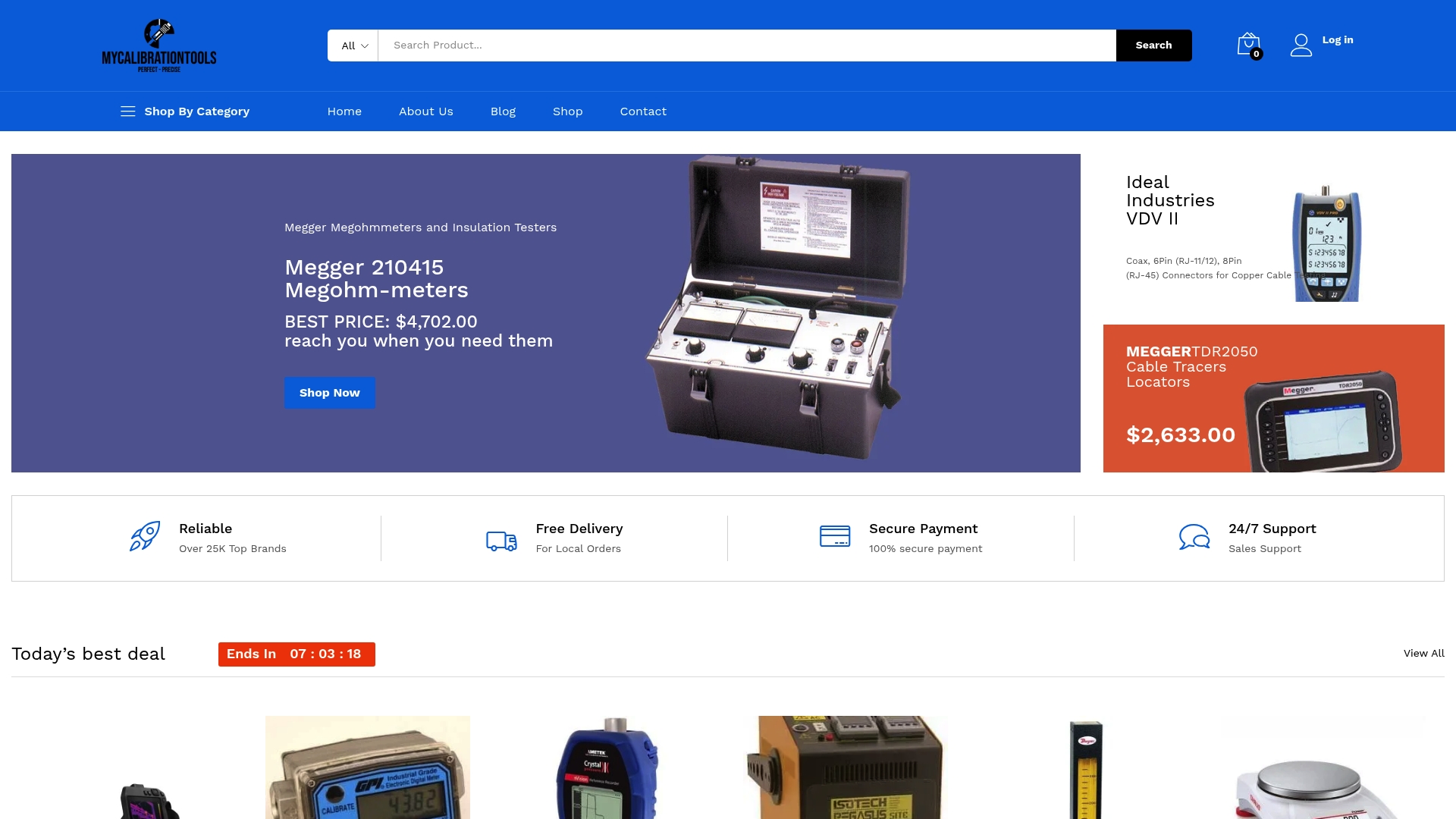
Multimeter Asia reports a selection from over 25,000 top brands. The site advertises 100% secure payments, free local delivery, and 24/7 support for order issues. The marketplace emphasizes professional instruments such as Megger Megohmmeters and insulation testers for field and laboratory use.

Core Features

The marketplace hosts a wide range of calibration and measurement instruments with clear product categorization and filtering for faster discovery. It pairs that catalog with global shipping and a distribution network to reach international labs and service teams. Support resources, including FAQs, blogs, and technical guides, sit alongside customer account management and order tracking.

Key Differentiator

A broad catalog of curated, brand trusted professional grade tools separates this marketplace from general electronics sellers. The platform focuses on tools that meet calibration standards used in industrial and laboratory environments. That catalog links directly to support resources and worldwide logistics for procurement and after sales service.

Pros

The site maintains an extensive product catalog that covers electrical test equipment, RF calibration kits, and environmental testers, which helps teams find exact match replacements. Trusted brands and professional grade listings reduce the time spent validating equipment specifications before purchase. The user experience combines informative content and a user friendly website, so procurement and technical staff can research and order with fewer follow ups.

Cons

  • Higher price point reflects premium quality and professional grade components, which may deter budget conscious buyers.

Who It’s For

This marketplace fits calibration technicians, electrical engineers, and industrial laboratories that require traceable, accurate instruments. Quality assurance teams and R&D departments will benefit from brand trusted parts and technical documentation. Training centers and educational programs seeking calibrated teaching tools will also find relevant inventory.

Unique Value Proposition

Free local delivery and 24/7 support reduce downtime for field teams that need rapid instrument replacement or urgent troubleshooting. The site also offers secure payment processing and account based order tracking for procurement teams. Those service elements convert catalog breadth into faster, more reliable procurement workflows for professional users.

Real World Use Case

A manufacturing calibration technician locates a high accuracy pressure calibrator and RF kits, reads the vendor guides, and places an account order. The items ship via the marketplace logistics network and arrive ready for immediate deployment in quality assurance. The technician logs receipt and tracks calibration certificates through the account dashboard.

Pricing

Prices vary widely across categories to reflect professional and industrial grade quality. Calibration kits start around $1,650, and high end RF network analyzers can cost over $40,000. Shipping is available worldwide and most orders process within a standard lead time.

Website: https://multimeterasia.com

Megger

https://megger.com

At a Glance

Megger’s range spans handheld insulation testers to large-scale diagnostic systems for transformers, motors, and relay protection, plus asset monitoring for predictive maintenance. The catalog pairs field instruments with data management tools for maintenance planning. This combination targets utilities and industrial teams that need both spot tests and continuous diagnostics.

Core Features

Megger combines electrical test instruments and diagnostic systems with monitoring solutions across utilities, renewables, water, transportation, and data centers. The offering includes handheld insulation and cable testers alongside networked asset monitoring and data-driven condition reporting. Accompanying technical support, training, and a knowledge hub help teams adopt the tools and interpret results.

Key Differentiator

Megger distinguishes itself by pairing industry-specific diagnostic hardware with structured technical support and training programs. That focus moves it beyond a parts’ supplier to a partner for condition-based maintenance programs. For teams deploying monitoring at scale, the vendor-backed training reduces the learning curve for complex systems.

Pros

Megger provides a broad product set tailored to sector workflows, from quick field checks to continuous monitoring, which reduces guesswork during maintenance. The company maintains a global distribution and support network, which helps field teams get spare parts and service in many regions. Its training programs and knowledge hub improve technician competency and shorten the time from purchase to effective use.

Cons

  • Some website pages return “Page Not Found,” which makes online browsing and quick specification lookup unreliable.
  • Extensive technical content can overwhelm technicians new to advanced diagnostic systems, increasing onboarding time.
  • Premium industrial systems carry higher price points, which can strain smaller maintenance budgets.

When It May Not Fit

Organizations outside Megger’s regional footprint may face shipping or local support gaps that complicate installation and calibration. Teams without internal electrical specialists will need outside help for high-end system setup and configuration. Shops that require immediate, transparent online pricing will find the vendor’s model focused on consultation rather than published rates.

Who It’s For

Electrical engineers, utility maintenance crews, and OEM technicians who run routine inspections and long-term asset health programs will benefit most. The product set suits teams that need a mix of handheld testers and networked monitoring systems. Buyers who value vendor-led training and documentation will see faster return on deployment.

Real World Use Case

A utility orders insulation testers and networked monitoring modules, then schedules Megger-led training for technicians. Field crews perform routine substation inspections with handheld testers and upload results to the vendor’s data tools. That workflow identifies early insulation degradation and enables scheduled repairs before outages occur.

Pricing

Prices vary widely across product categories, from handheld testers to premium industrial diagnostic systems. The website does not publish specific price ranges. Detailed pricing and quotes are available by request or through direct consultation with Megger sales.

Website: https://megger.com

Instrotech Ltd
https://instrotech.com

At a Glance

Over 40 years of specialist experience supports Instrotech Ltd’s inventory and service mix for electrical test professionals. The catalogue includes brands such as Fluke, Megger, Martindale, and Seaward. Free UK shipping on all orders simplifies procurement for onsite teams and small contractors.

Core Features

Instrotech stocks a wide range of electrical and environmental test equipment and supplies calibration, repair, and hire services. The company runs technical training courses aligned with the IET Code of Practice and offers UK based customer support. Secure online ordering comes with detailed product pages and routine promotional bundles.

Key Differentiator

Decades of industry experience combined with both product supply and service delivery make Instrotech distinct for UK professionals. Many distributors sell meters. Instrotech pairs sales with on demand calibration, hire, and accredited training to keep fleets compliant and ready.

Pros

The long operating history supports established vendor relationships and a broad parts supply chain. Availability of calibration, repair, and hire services reduces downtime for field teams and central maintenance departments. The training portfolio covers PAT testing and the IET Code of Practice, which helps technicians maintain certification and follow accepted workplace procedures.

Cons

  • Primarily serves the UK, so international shipping policies and rates are not clearly published.
  • Full pricing and live stock levels are sometimes absent online and may require direct quotation.
  • The site may rely on cookies for full functionality, which could affect privacy conscious buyers.

When It May Not Fit

If your operation is outside the UK and requires predictable international logistics, this supplier may not match your needs. Large multinational procurement programs that need consolidated global shipping and standardized lead times will likely need additional vendor arrangements. Buyers who require instant online pricing for every item may find gaps in the catalogue.

Who It’s For

Instrotech suits electricians, maintenance engineers, and facilities managers working in the UK who need reliable test instruments plus service support. Procurement teams that prefer single suppliers for purchase, calibration, and training will find the combined offering useful. Smaller firms that value free UK shipping and local technical guidance gain operational convenience.

Real World Use Case

A manufacturing maintenance team hires portable PAT testers and books calibration for critical meters before a planned shutdown. Technicians attend a certified PAT testing course to bring inhouse competency up to date. Instrotech provides the tools, service bookings, and documentation needed for compliance audits.

Pricing

Prices vary across the product range. Basic testers start at around £39, while advanced thermal cameras and high voltage test tools reach several thousand pounds. Free UK shipping applies to orders, and promotional bundles appear periodically.

Website: https://instrotech.com

Protec Equipment Resources

https://protecequip.com

At a Glance

Protec reports certified NIST-traceable calibration labs paired with a nationwide rental fleet that speeds delivery to regional sites. The marketplace combines rental, calibration, and repair services under one vendor network. That setup targets field technicians and utilities needing fast access to high-voltage and relay test tools.

Core Features

Protec operates a nationwide rental fleet and several in-house calibration labs that handle NIST-traceable certificates and routine instrument servicing. The company also offers electrical equipment repair, expert technical consultation, and multiple regional locations to shorten lead times. Those capabilities reduce logistics friction when projects demand calibrated gear or rapid instrument replacement.

Key Differentiator

Protec’s most distinguishing element is that network of regional warehouses and in-house labs. That network lets teams get certified calibration and rental equipment without sending instruments across the country. For projects with tight windows, that local capacity shortens downtime and simplifies project logistics.

Pros

Protec lists a broad inventory of industry brands and service types, which makes single-supplier sourcing practical for complex projects. Multiple laboratories and regional offices support faster turnarounds for calibration and repair, keeping instruments in the field. The technical support team has domain knowledge in power testing, relay diagnostics, and insulation measurements, which helps technicians resolve setup or measurement questions quickly.

Cons

  • Primarily focused on electrical testing needs, so product categories outside that scope are limited.
  • Service coverage concentrates on the US market, with limited international shipping options.
  • Pricing information is not published on the site, and specialized services may carry a premium.

When It May Not Fit

Buyers outside the United States will find international logistics constrained by Protec’s regional focus. General consumers or hobbyists looking for low-cost handheld meters will find the offering misaligned with their needs. Projects that require transparent fixed pricing up front may prefer vendors that list standard rates for rentals and calibrations.

Who It’s For

Protec fits electrical engineers, utility maintenance teams, and industrial contractors that need calibrated test gear and fast local support. It also serves engineering firms that require certified calibration for acceptance testing. The ideal customer values technical backup and regional delivery over lowest-possible rental rates.

Real World Use Case

A utility field crew rents high-voltage test sets from Protec for an outage window. The gear ships from a nearby warehouse with calibration certificates attached, and Protec supplies phone support during the commissioning test. If a device shows drift, Protec arranges rapid repair or a swap to keep the crew on schedule.

Pricing

Prices vary by equipment category and service scope, with rental terms available by day, week, or month. Calibration and repair are billed per instrument and per scope of work. No fixed price ranges are listed on the website, so buyers should request a quote for project budgeting.

Website: https://protecequip.com

AVO New Zealand
https://avo.co.nz

At a Glance

Service and calibration are performed by Megger certified technicians, a detail that stands out for buyers who need traceable maintenance. The company pairs a broad catalog of test instruments with a self learning training portal and consultative support. The business primarily operates within New Zealand and focuses on professional power and industrial applications.

Core Features

AVO New Zealand stocks advanced electrical testing and measurement equipment for cable fault location, insulation testing, and grid monitoring while carrying respected vendor lines such as Megger. The site supports customers through consultative product selection and troubleshooting, and it offers calibration and servicing handled by Megger certified technicians. AVO also delivers knowledge updates, articles, and a self learning training portal for staff assessment and upskilling.

Key Differentiator

The vendor pairs precision electrical testing solutions with local technical support and hands on training, which narrows its appeal to operational teams that need field support and documented calibration. Its strength lies in after sale services, including equipment calibration and instructor led training, rather than only online transactions. That focus makes it a service oriented marketplace for professionals rather than a general consumer storefront.

Pros

AVO New Zealand offers a wide selection of specialized tools from trusted brands, which helps you match instrument capability to jobsite requirements. Technical consultation and Megger level servicing reduce risk when selecting complex testers and protection equipment, and the training portal helps certify crews on instrument use and assessment. Regular product news and a pipeline of devices such as the Megger MFT-X1 show attention to evolving field needs and vendor partnerships.

Cons

  • Primarily serves the New Zealand market, so international shipping and support are limited for overseas buyers.
  • Product focus targets power and industrial sectors, making the catalog less useful for casual DIYers or general consumer buyers.
  • Detailed pricing and discounts are not publicly listed, which means you must request a quote for many items.
  • No visible online shopping cart or instant purchase flow, so transactions rely on contact and quote cycles.

When It May Not Fit

If you need a global supplier with online checkout and fast international shipping, this marketplace will not meet that requirement. If you are a consumer seeking basic handheld multimeters or retail checkout, the product mix is too specialized. If transparent, instant pricing is critical for procurement workflows, the contact based sales model will slow purchases.

Who It’s For

Electrical engineers, power utility technicians, and industrial maintenance managers in New Zealand who need precision test gear, documented calibration, and staff training. Procurement teams that value vendor support and local service capacity will benefit most. Organizations that require instrument traceability and certification after calibration will find the offering aligned with their compliance needs.

Real World Use Case

An electrical engineer at a regional utility requests a demonstration of Megger cable fault detection tools and receives a site visit from AVO staff. The team selects instruments with consultative input, schedules calibration with Megger certified technicians, and enrolls technicians in the training portal for practical assessment. The result is matched instrumentation, documented servicing, and a trained crew ready to deploy the equipment.

Pricing

Pricing varies by product category and is not listed item by item on the site. The store provides quotes for high end instruments, and calibration or servicing is billed separately. No public subscriptions, tiered packages, or bulk discount schedules are advertised.

Website: https://avo.co.nz

Comparison of alternatives

Choosing between these platforms involves balancing catalog reach, specialized training, geographies served, and procurement workflows.

Specialized Training and Support

Protec Equipment Resources stands out for its localized calibration labs and nationwide rental service in the United States, speeding access to certified testing solutions for field crews under time constraints. For organizations operating solely within the UK, Instrotech Ltd offers free shipping and end-to-end service capabilities. AVO New Zealand supports regional power utilities with Megger-certified servicing and an advanced training portal designed for staff upskilling.

Procurement Efficiency

Multimeter Asia leads the category with its broad selection from professional-grade brands, global logistics options, and account management for orders. Protec excels at minimal downtime for instrument calibrations through its distributed lab network and customer-centric rental workflows. Megger pairs its catalog with strong post-sale support and industry-geared diagnostic tools that come with structured onboarding assistance.

Best fit

  • Field teams needing urgent instrument replacements will benefit most from Protec Equipment Resources, with its calibrated rental fleet and regional repair capacity.
  • Teams requiring access to free shipping and integrated service support within the UK will find Instrotech Ltd provides substantial advantages.
  • Organizations sourcing advanced tools with active input and Megger-level servicing in New Zealand will select AVO New Zealand’s tailored offerings.

Our pick

Multimeter Asia delivers catalog breadth featuring brands trusted for professional-grade testing and technical validation. Free local delivery and responsive 24/7 support reduce delays in urgent workflows. While regional vendors may exceed in service specialization locally, Multimeter Asia fit buyers seeking catalog breadth and secure, reliable procurement workflows.

Here is a comparison highlighting decision-relevant dimensions in electrical test equipment marketplaces:

CompanyCore OfferingKey DifferentiatorBest Suited ForPricingLimitations
Multimeter AsiaProfessional grade calibration tool marketplaceCatalog breadth with worldwide logisticsCalibration and industrial lab techniciansStarting at $1,650Higher price point reflective of professional-grade offerings
MeggerElectrical test equipment and diagnosticsIndustry-specific diagnostic tools and trainingUtility maintenance and R&D teamsPrice not publishedComplex systems may increase onboarding time
Instrotech LtdElectrical test instruments and trainingIET Code of Practice aligned training servicesUK-based maintenance engineers and techniciansBasic instruments at £39Primarily serves the UK, limited international shipping
Protec Equipment ResourcesEquipment rental with NIST-calibrated toolsRegional storage for fast turnaroundU.S.-based utility and field maintenance crewsPrice not publishedLimited shipping options internationally
AVO New ZealandCalibration services with Megger expertiseRegional service by certified techniciansNew Zealand power utilities and engineersPrice not publishedInternational buyers face logistics and support limitations

Choosing Between Fluke T5 1000 and T5 600: How to Find the Best Fit for Your Calibration Needs

Selecting the right testing equipment that balances measurement range and operational reliability can be a challenge for calibration technicians and electrical engineers. The debate between the Fluke T5 1000 and T5 600 focuses on matching tolerance level and connectivity options to specific project requirements. Multimeter Asia offers access to an extensive selection of professional-grade testing instruments, including models suited to those exact needs.

Secure payments, free local delivery, and 24/7 support ensure you receive reliable tools quickly. From handheld insulation testers to advanced Megger Megohmmeters, Multimeter Asia provides over 25,000 options calibrated for precision across industries like electrical maintenance and manufacturing. Explore their inventory at Multimeter Asia and equip your team with the accuracy and confidence required for effective measurement. Take the next step by browsing their catalog and selecting the ideal Fluke tester tailored to your technical demands.

FAQ

Which marketplace offers secure payments and 24/7 support for order issues?

Multimeter Asia provides secure payments along with 24/7 support for order issues, ensuring a trustworthy shopping experience. The platform also features a wide range of electrical test equipment, making it a natural fit for procurement teams. Explore Multimeter Asia for reliable purchasing options.

How does Multimeter Asia compare to Protec Equipment Resources for calibration services?

Protec Equipment Resources offers certified NIST-traceable calibration labs, which is a significant strength for those needing precise calibration services. Multimeter Asia, however, emphasizes its extensive product catalog and global shipping options, appealing particularly to professionals seeking a wide array of electrical test equipment. Assess your specific calibration needs to determine the best fit.

What advantages does Multimeter Asia offer in terms of product variety?

Multimeter Asia features an extensive catalog of over 25,000 top brands, ensuring technicians have access to a large selection of electrical test equipment. This diversity allows teams to find specific replacements quickly, making Multimeter Asia a strong choice for professionals. Consider Multimeter Asia for a broad range of tools in one place.

Does Multimeter Asia provide training resources for users?

Multimeter Asia offers support resources, including FAQs and technical guides, which assist users in understanding equipment usage. This emphasis on informatics can help ensure that users can effectively utilize their electrical test equipment. For additional hands-on support and deeper learning, consult Multimeter Asia’ wealth of resources.

Can I expect a straightforward purchasing process on Multimeter Asia?

Multimeter Asia features a user-friendly website that simplifies product discovery and order placement, making it easier for procurement teams to buy electrical test equipment efficiently. This streamlined experience helps to reduce follow-ups, making the purchasing process more effective. Take advantage of the intuitive layout for quick order placements.
Posted on

Megger Tester Guide for Electrical Professionals

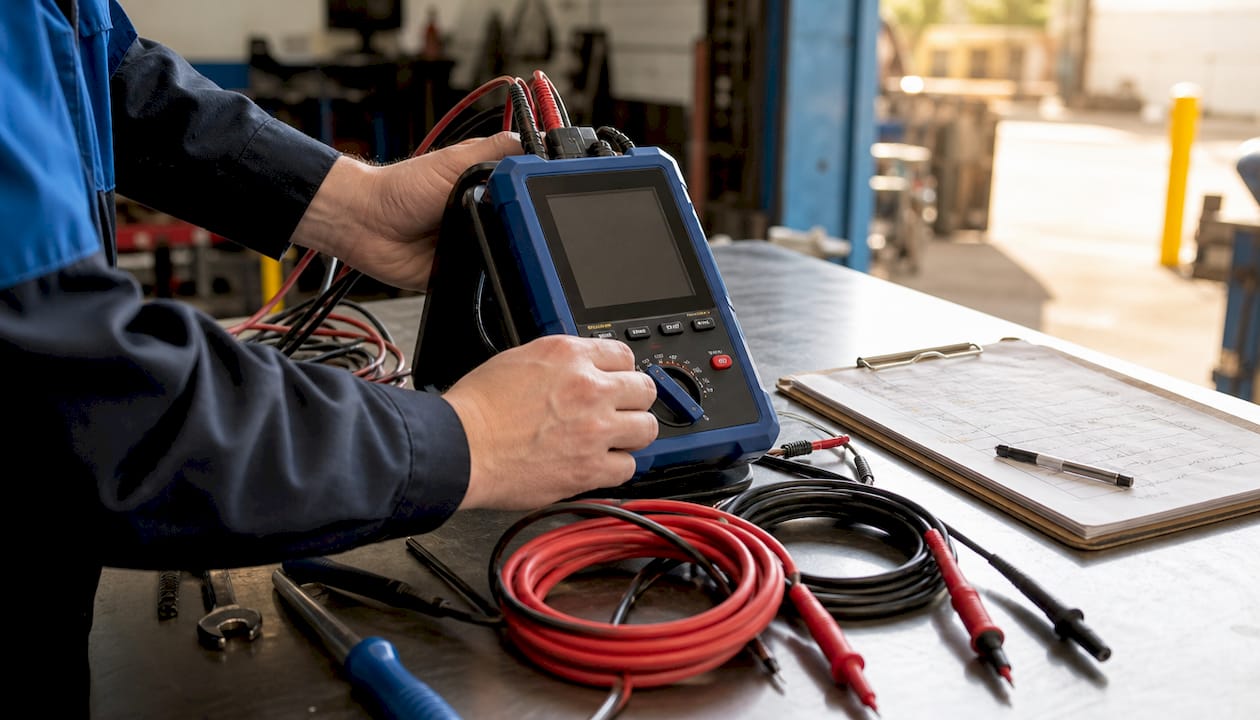
Electrical technician using megger tester on motor

A megger tester is defined as an insulation resistance tester that applies a high DC voltage across electrical insulation to measure its resistance in megohms or teraohms. Electrical engineers and technicians rely on the megohmmeter, the recognized industry term for this instrument, to verify that cables, motors, transformers, and switchgear meet the insulation integrity thresholds required by IEC 61010 and related safety standards. A failed insulation test is one of the clearest early warnings of equipment degradation, making the megger insulation tester one of the most consequential instruments in any electrical maintenance program. Selecting the right model, understanding its safety ratings, and applying correct test procedures directly determines the accuracy of your electrical safety assessments.

What are the main types and voltage ranges of megger testers?

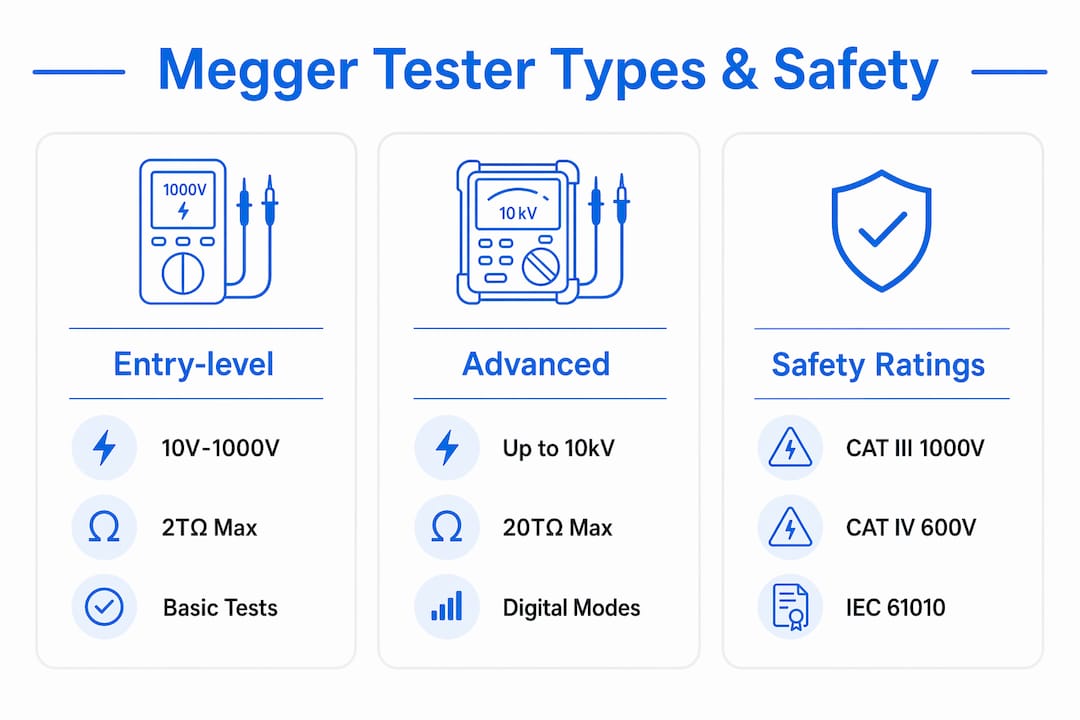
Megger insulation testers fall into three practical categories based on test voltage output, and each category targets a distinct application context.

Entry-level models cover test voltages from 10V to 1000V. The MIT400/2 series, for example, measures resistance up to 200 GΩ and operates between -20°C and +55°C. These handheld units use impact-resistant ABS housing and run on batteries, making them the standard choice for routine site inspections, domestic wiring checks, and low-voltage motor testing.

Intermediate models step up to 2500V output. The MIT2500 series operates at voltages exceeding 1000V and includes a digital display with a guard terminal that reduces surface leakage errors during measurement. This category suits medium-voltage cable testing and industrial motor assessments where higher test voltages are needed to stress-test thicker insulation.

Hands operating advanced megger insulation tester

Advanced models reach 10,000V output. The MIT1025, for instance, measures resistance up to 20 TΩ and supports both battery and mains operation. At approximately 4.5 kg, it is a bench-capable instrument designed for high-power transformer testing, generator windings, and substation cable assessments.

CategoryTest voltage rangeMax resistanceTypical application
Entry-level10V–1000V200 GΩRoutine site inspections, domestic wiring
Intermediate50V–2500V200 GΩMedium-voltage cables, industrial motors
Advanced500V–10,000V20 TΩTransformers, generators, substations

Power source choice matters in the field. Battery-only units offer full portability for confined-space or rooftop work. Dual-source models like the MIT1025 allow mains operation during extended laboratory-style testing sessions, which preserves battery life and maintains output voltage stability under continuous load.

Which critical safety standards must you look for in an insulation tester?

Safety ratings are not optional specifications. They define whether a device protects you in the environment where you actually work.

Infographic comparing megger tester types and safety ratings

The most critical rating is CAT IV 600V. All insulation tester tiers from entry-level to expert-grade must carry this rating for live-environment testing. CAT IV covers measurements at the origin of low-voltage installations, including utility service entrances and outdoor conductors. Using a CAT III device in a CAT IV environment creates a genuine arc-flash and shock risk.

Key safety and environmental features to verify before purchase:

  • IEC 61010 compliance: The governing standard for electrical measurement equipment safety. Confirms the device meets defined overvoltage and insulation requirements.
  • IEC 61326 compliance: Covers electromagnetic compatibility, confirming the tester produces accurate readings in environments with electrical noise.
  • IP65 ingress protection: Dust-tight and water-resistant construction for reliable field use in rain, dust, and industrial spray environments.
  • Operating temperature range: Most industrial-grade megohmmeters operate from -20°C to +55°C, covering outdoor winter conditions and hot electrical rooms.
  • Noise immunity: Expert-grade models include adaptive filters that suppress interference from adjacent live conductors, which is critical in substations.

Pro Tip: Always match the CAT rating to your specific test environment, not just the nominal voltage. A substation service entrance requires CAT IV even if the measured voltage is only 400V.

How do advanced features like Bluetooth and diagnostic modes improve utility?

Modern insulation resistance testers do far more than return a single resistance value. Advanced diagnostic modes convert a pass/fail instrument into a predictive maintenance tool.

  1. Polarization Index (PI): Compares the 10-minute resistance reading to the 1-minute reading. A PI below 2.0 on a motor winding typically indicates moisture contamination or aging insulation. This ratio reveals trends that a single-point reading cannot.

  2. Dielectric Absorption Ratio (DAR): Compares the 60-second to the 30-second reading. DAR provides a faster version of the PI test for situations where a full 10-minute test is impractical.

  3. RE>Act diagnostic mode: Advanced diagnostic features like RE>Act analyze resistance trends during the test period to predict long-term insulation health. This goes beyond a snapshot measurement and gives you a trajectory.

  4. Bluetooth connectivity: The MIT2500 series supports wireless data transfer up to 10 meters to a PC or tablet. This eliminates manual transcription errors and allows test records to feed directly into maintenance management systems.

  5. Noise immunity up to 8 mA: Expert-grade models filter interference from adjacent energized conductors. This feature is not a luxury in active substations. Without it, noise can inflate resistance readings and produce false-pass results.

Pro Tip: When testing in a live substation, activate the noise immunity filter before recording any reading. An unfiltered reading in a high-interference environment can be off by an order of magnitude.

The Megger 210415 insulation tester available at Multimeter Asia combines several of these diagnostic modes in a field-ready package, making it a practical choice for engineers who need more than basic resistance values.

What are the best practices for insulation resistance testing?

Correct procedure protects both the operator and the equipment under test. Skipping any step introduces measurement error or safety risk.

  1. De-energize and discharge the circuit. Confirm the circuit is isolated using a voltage tester. Discharge capacitive equipment fully before connecting the megohmmeter. Residual charge can damage the tester and produce erratic readings.

  2. Verify tester calibration. Routine calibration against IEC standards confirms measurement accuracy. Check the calibration date on the instrument label before starting any test. An out-of-calibration device produces data that cannot be used for compliance records.

  3. Select the correct test voltage. Match test voltage to the rated voltage of the equipment. A 400V motor typically requires a 500V test. A 6.6 kV cable requires at least 5,000V. Applying too low a voltage under-stresses the insulation and misses developing faults.

  4. Connect the guard terminal when available. The guard terminal routes surface leakage current away from the measurement circuit. On contaminated or humid cable surfaces, surface leakage can be orders of magnitude lower than true insulation resistance. Ignoring the guard terminal produces falsely low readings.

  5. Apply the test voltage and record at defined intervals. Standard procedure involves recording resistance at 30 seconds, 60 seconds, and 10 minutes for PI calculation. Allow the reading to stabilize before noting the value.

  6. Discharge the test object after measurement. High-voltage testers charge capacitive equipment during the test. Discharge through the tester’s built-in discharge function or a resistive discharge lead before disconnecting test leads.

  7. Interpret results against published standards. A resistance below 1 MΩ on a low-voltage motor winding is a clear failure. For medium-voltage equipment, minimum acceptable values depend on voltage class and equipment age. Compare results to the manufacturer’s specification and to previous test records to identify trends.

The Megger DET4TD2 supports both insulation resistance and continuity testing in a single instrument, which reduces the number of tools needed on complex commissioning jobs.

Key Takeaways

A megger tester’s value depends entirely on matching its voltage range, safety rating, and diagnostic capabilities to the specific electrical environment and equipment under test.

PointDetails
Match voltage to equipment ratingSelect test voltage based on the rated voltage of the equipment, not convenience.
CAT IV 600V is non-negotiableAny insulation tester used in live industrial environments must carry a CAT IV 600V rating.
Diagnostic modes add predictive valuePI, DAR, and RE>Act modes reveal insulation trends that single-point readings miss entirely.
Calibration determines data validityAn out-of-calibration tester produces records that cannot support IEC compliance documentation.
IP65 and temperature range matter in the fieldVerify ingress protection and operating temperature before deploying any tester outdoors or in industrial environments.

What I’ve learned from years of insulation testing in the field

The most common mistake I see electrical professionals make is selecting a tester based on price tier rather than application requirements. An entry-level unit rated to 1000V is entirely adequate for domestic wiring. That same unit is the wrong tool for a 3.3 kV motor in a petrochemical plant, regardless of how well it is built.

The second issue is treating calibration as an administrative task rather than a technical one. I have seen test records invalidated during audits because the instrument was six months past its calibration due date. The reading may have been accurate. Without a current calibration certificate, you cannot prove it. Multimeter Asia stocks instruments with traceable calibration documentation, which removes that compliance risk from the start.

The advancement I find most practically significant is Bluetooth data transfer combined with PI and DAR diagnostic modes. These two features together shift insulation testing from a reactive check to a predictive maintenance input. When you can log resistance trends over multiple test cycles and transfer them wirelessly to a maintenance database, you build an insulation health history that supports informed replacement decisions before failures occur.

Selection should also account for the noise environment. Expert-grade models with adaptive interference filters produce reliable readings in active substations where entry-level units return unstable values. Paying for that capability only makes sense if your work regularly takes you into high-interference environments. Know your job scope before specifying the instrument.

— Rachmadi

Precision insulation testers available at Multimeter Asia

Multimeter Asia carries a full range of Megger insulation testers and megohmmeters suited to every application tier, from routine site inspections to high-voltage substation assessments. Each instrument is sourced from verified manufacturers and comes with the documentation electrical professionals need for IEC compliance records.

https://multimeterasia.com

The catalog at Multimeter Asia includes over 25,000 products across electrical testing, calibration, and thermal imaging categories, with free local delivery, 100% secure payments, and 24/7 technical support. Whether you need an entry-level handheld unit or an advanced dual-source tester with full diagnostic capability, the selection covers the full specification range that field engineers and maintenance technicians require.

FAQ

What is a megger tester used for?

A megger tester measures the insulation resistance of electrical equipment, including cables, motors, and transformers, to verify that insulation integrity meets safety and compliance thresholds. It applies a high DC voltage and measures the resulting resistance in megohms or teraohms.

What voltage should I use for insulation resistance testing?

Test voltage should match the rated voltage of the equipment under test. A 400V motor typically requires a 500V test voltage, while medium-voltage cables rated at 6.6 kV require at least 5,000V to adequately stress the insulation.

What does a CAT IV 600V rating mean on an insulation tester?

CAT IV 600V is the highest measurement category defined by IEC 61010 and covers testing at the origin of low-voltage installations, including utility service entrances. All professional-grade insulation testers used in live industrial environments must carry this rating.

What is the Polarization Index and why does it matter?

The Polarization Index compares the 10-minute insulation resistance reading to the 1-minute reading. A PI below 2.0 on a motor winding typically indicates moisture or insulation degradation, making it a key diagnostic metric for predictive maintenance programs.

How often should a megger insulation tester be calibrated?

Calibration frequency depends on the manufacturer’s specification and the applicable IEC standard, but annual calibration is the common industry baseline. Instruments used in compliance-critical environments should carry a current traceable calibration certificate to support audit documentation.

Article generated by BabyLoveGrowth

Posted on

Top 5 Thermal Camera for Home Inspection Options 2026

Home inspector using thermal camera on house exterior

Sourcing a reliable thermal imaging camera for home inspection is complicated by hardware gaps and vendor differences. Most models focus on industrial use or demand direct vendor contact for pricing, which slows quick procurement for technical professionals. This comparison details features, support, and pricing for five thermal cameras so calibration labs and maintenance teams can select the best fit for recurring inspections.

Table of Contents

Multimeter Asia

https://multimeterasia.com

At a Glance

The catalog lists handheld oscilloscopes, thermal cameras, and branded Megger Megohmmeters and insulation testers. The company operates globally from Jakarta and sources products from leading manufacturers. The vendor reports a selection of more than 25,000 top brands, a claim that speaks to breadth.

Core Features

Multimeter Asia groups products across calibration, electrical, environmental, RF, and laboratory testing categories, with clear product pages and technical specifications. Global shipping combines with online ordering and supportive customer service to serve professional buyers. According to the vendor, the site also offers 100% secure payments and 24/7 support.

Key Differentiator

The inventory focus on professional-grade tooling sets this retailer apart. The offering centers on internationally recognized calibration and measurement instruments sourced from top OEMs, which simplifies procurement for technical teams. Technical documents and category organization shorten evaluation time when teams must replace or certify instruments quickly.

Pros

The catalog depth lets calibration labs and maintenance teams find specialized modules and common test meters in one place. Reputable OEM sourcing improves confidence in instrument traceability and long term durability. Global distribution and online ordering reduce lead time for remote sites. Clear categorization and detailed product pages reduce guesswork when matching specs to calibration procedures. The vendor emphasizes industry measurement standards across listings, which helps compliance-focused teams.

Cons

  • Primarily online retail with limited physical store presence.

Who It’s For

Calibration labs, industrial maintenance engineers, research teams, and technical professionals who require traceable, high precision instruments will get the most value. Organizations that buy measured quantities of test gear for recurring calibration tasks match this supplier profile. Casual hobbyists and one-off consumers will likely find the selection and pricing geared toward professional budgets.

Unique Value Proposition

That catalog size claim means you can source rare OEM modules alongside mainstream meters without switching vendors. Consolidating purchases reduces vendor management and shortens procurement cycles for maintenance teams. The combination of branded instruments and on-demand technical support makes lifecycle planning for calibrated assets easier.

Real World Use Case

A manufacturing plant orders calibration modules and electrical test instruments online to keep production equipment in tolerance. The plant uses the vendor’s technical assistance during instrument setup and to verify measurement ranges before on-site calibration. Repeat orders reduce configuration time for the maintenance crew.

Pricing

Prices vary widely across categories. Most products range from a few hundred to several thousand USD, reflecting professional grade testing equipment. Competitive pricing and free local delivery are advertised for qualifying orders.

Website: https://multimeterasia.com

Seek Thermal

https://thermal.com

At a Glance

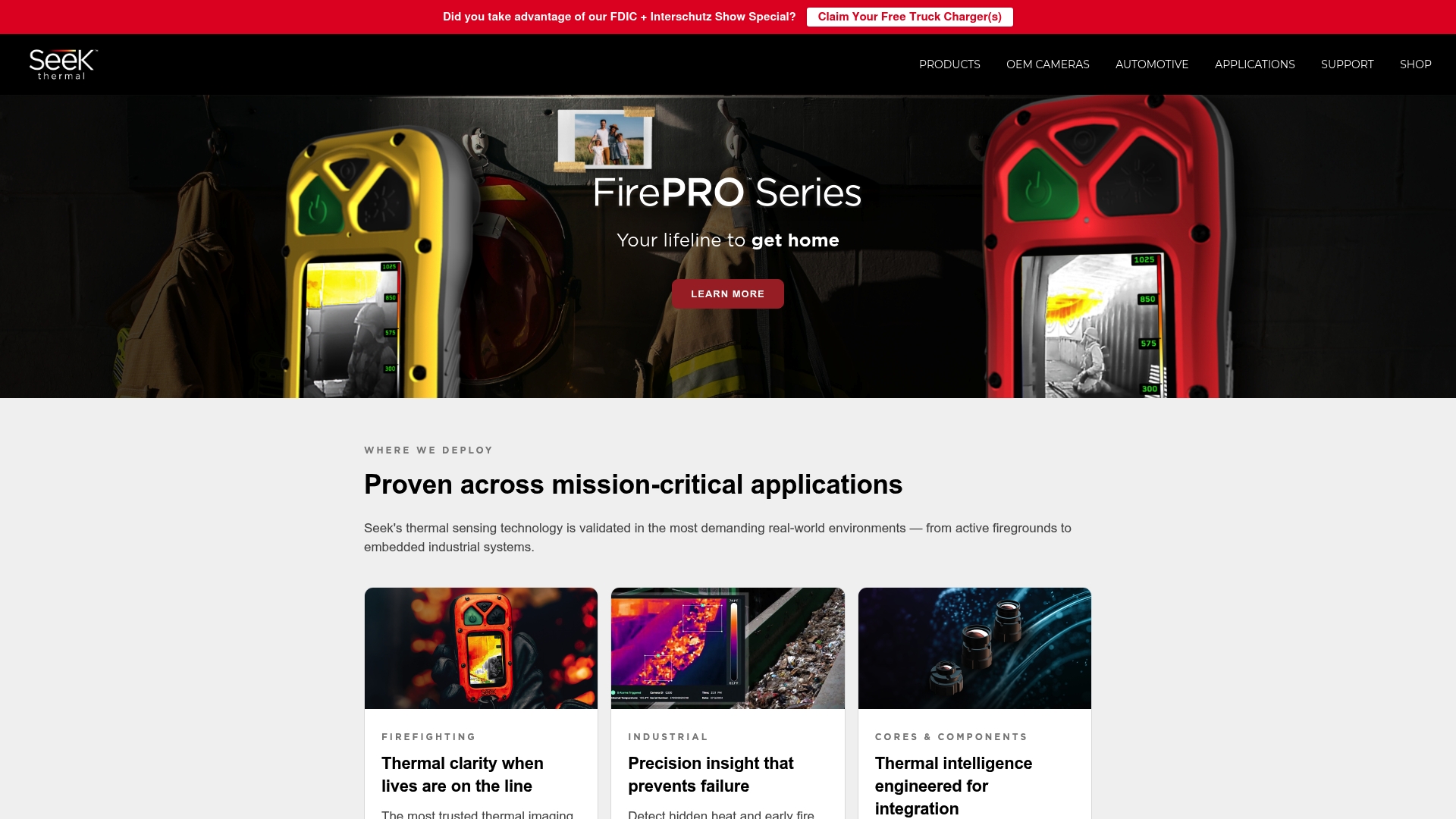
Seek Thermal manufactures its own proprietary sensors from design to final assembly in Santa Barbara, California. That vertical control drives the product range, which spans handheld cameras, fixed monitors, OEM cores, and smartphone attachables. The hardware targets demanding sites with rugged, IP67 rated housings that hold up in rough field use.

Core Features

Seek Thermal pairs in-house sensor design with a broad product lineup so customers can choose handheld, fixed monitoring, or OEM modules that match their workflow. The cameras implement advanced imaging, including mixed-gain imaging, to retain detail across high-contrast scenes. Rugged enclosures and scalable integration options support fire, industrial maintenance, security, and OEM applications.

Key Differentiator

Seek Thermal’s core advantage is its vertical integration from sensor engineering through manufacturing. That control lets the company tune sensor performance to specific product classes and keep component choices aligned with durability and cost targets. For professionals who require predictable supply and consistent imaging behavior across models, that manufacturing alignment matters.

Pros

In-house sensor expertise produces consistent thermal sensitivity across multiple product lines, which helps technicians interpret images without constant recalibration. The product lineup covers handheld inspection, fixed site monitoring, and OEM cores, so teams can standardize on one vendor for both portable and embedded use. U.S. domestic design and manufacturing support tighter quality control and timelier firmware updates for deployed systems.

Cons

  • Pricing sits above bargain consumer options, which can put small teams on a tight budget.
  • The catalog focuses on industrial and safety markets rather than casual consumer retail, limiting simple consumer-ready models.
  • Regional product availability and support vary by market, which may delay replacements or training in some areas.
  • OEM modules require integration knowledge, adding overhead for teams without embedded systems experience.

When It May Not Fit

Seek Thermal is not the best choice for hobbyists who want an inexpensive phone add-on for occasional use. Small firms with strict budgets may find the entry price prohibitive for broad deployment. Organizations that need turnkey consumer-style apps and retail support will likely prefer a vendor focused on consumer sales. Teams without systems engineers should plan for integration time when adopting OEM cores.

Who It’s For

The line fits safety officers, industrial maintenance teams, OEM manufacturers, search and rescue squads, and law enforcement units that need durable, repeatable thermal imaging. Buyers who value controlled sensor performance and product traceability will find the portfolio aligned with operational and procurement needs. Those users typically require field-hardened hardware and predictable supply.

Real World Use Case

A fire department equips crews with Seek Thermal FirePRO cameras for interior search and hotspot mapping. Personnel use handheld units to locate victims in low-visibility conditions while fixed Seek Guardian monitors provide continuous thermal trend data at high-risk industrial sites. That combination shortens scene assessment and supports post-incident analysis.

Pricing

Prices begin near $699 for entry handheld models and rise to over $4,700 for advanced models. The vendor advertises premium models that include NFPA certified options. OEM cores and modules are quoted by specification and volume, and certain orders qualify for free shipping, trade-in discounts, or bulk purchase pricing.

Website: https://thermal.com

Flir

https://flir.com

At a Glance

Flir reports over 60 years of infrared innovation. The company maintains a broad portfolio that spans industrial, public safety, defense, marine, and scientific imaging. Flir pairs its product range with in house engineering, manufacturing, and regional service centers.

Core Features

Flir offers thermal imaging and visible light sensing hardware across handheld, mounted, and system scale formats, plus acoustic sensing options. The product line pairs in house manufacturing with warranty, calibration, maintenance, repair, and training services. Localized support and regional service centers back field deployments for long term operations.

Key Differentiator

Flir’s long tenure and its in house engineering and manufacturing set it apart from vendors that assemble third party modules. That combination lets the company control quality across camera sensors, optics, and electronics while offering tailored solutions for public safety, industrial maintenance, or research labs.

Pros

Flir’s depth of experience makes its cameras familiar to first responders and maintenance teams. That experience supports a wide selection of models for handheld inspections, fixed monitoring, and scientific imaging that cover many inspection profiles. In house manufacturing and strict quality control reduce variability between units, and regional service centers plus complete support services help with calibration, repair, and operator training.

Cons

  • Product selection can be complex for new buyers who need only a simple handheld inspection camera.

  • Premium pricing places many advanced and industrial systems outside the budgets of small contractors or DIY homeowners.

  • Some specialized systems require extended training or on site support before they deliver reliable results.

When It May Not Fit

Small independent inspectors and budget conscious homeowners will likely find Flir’s advanced systems excessive. Projects that only need a basic handheld unit or a consumer grade camera may be better served by simpler, lower cost tools. Buyers who need plug and play simplicity with minimal training will face additional time and cost with complex configurations.

Who It’s For

Flir fits organizations and professionals who require durable, accurate thermal and sensing systems for critical work. Typical buyers include first responders, industrial maintenance teams, government safety agencies, and research institutions that need long term service, calibration, and model variety. Enterprises that plan recurring use and scheduled calibration get the most value.

Real World Use Case

A manufacturing plant installs Flir thermal imaging on key equipment to monitor bearing and motor temperature in real time. The maintenance team receives calibration and training from Flir and schedules preventative repairs when readings drift. That setup reduced unexpected downtime and supported compliance with internal safety protocols.

Pricing

Pricing varies by category, from portable handheld cameras to large industrial or military grade systems. Costs commonly start at a few thousand dollars for portable devices and can reach tens of thousands for high end industrial systems. Discounts, service packages, warranties, and calibration plans are available through consultation with Flir representatives.

Website: https://flir.com

Ulirvision

https://ulirvisiontech.com

At a Glance

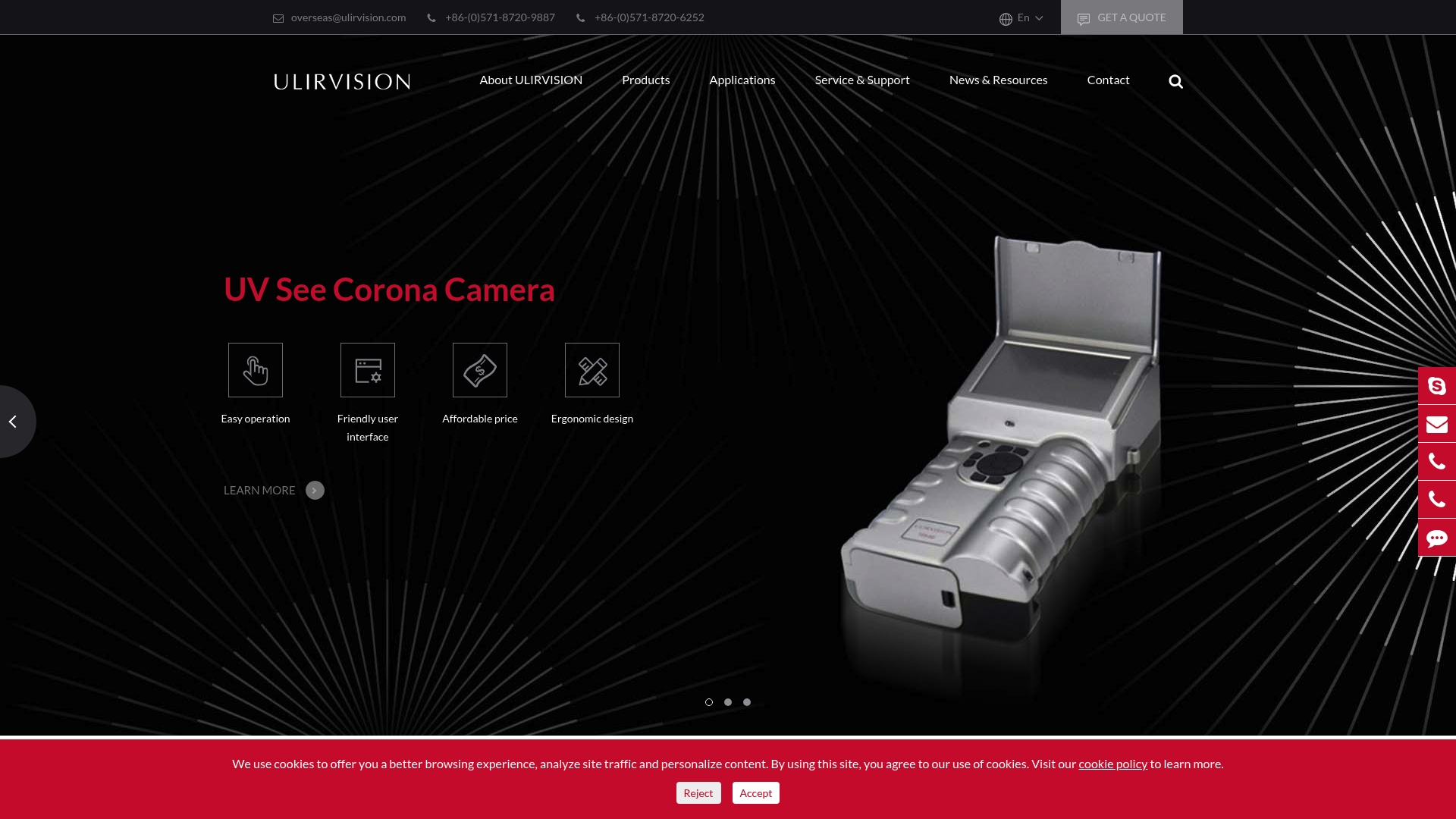
Ulirvision reports more than 100,000 units delivered to over 100 countries. The vendor also claims a patent portfolio exceeding 100 patents. The company dates back to 2005 and focuses on infrared thermal, ultraviolet, gas, and acoustic imaging for industrial safety. These scale signals explain why many utility and petrochemical operators evaluate its gear.

Core Features

Ulirvision ships a diverse lineup covering thermal imaging, ultraviolet corona cameras, gas leak detectors, acoustic imaging, and modular thermal cores, all aimed at industrial workflows. Devices pair rugged enclosures with interfaces designed for field technicians and come with technical training and after-sales support. Global distribution and formal training programs let operations integrate the devices into regular maintenance and security routines.

Key Differentiator

Ulirvision’s long R&D history and the vendor patent claim set it apart in industrial imaging. That claim underpins specialized sensor designs and firmware choices targeted at electric power, petrochemical, and defense use cases. The result is product families built around field reliability and task-specific measurement modes rather than consumer convenience.

Pros

Ulirvision delivers high-performance thermal and UV imaging hardware built for industrial duty. The company pairs product families with global technical support and formal training, which reduces ramp time for maintenance teams. Its long operating history means product lines and accessories are mature, and distributors are available in many regions.

Cons

  • Primarily designed for professional and industrial markets. This makes consumer-grade ease of use limited.

  • Product pricing may be premium, reflecting high-end optics and industrial certification costs.

  • Procurement and customization often require direct vendor engagement, which can slow small purchases.

When It May Not Fit

This offering is not a good match for hobbyists or homeowners who need a simple pocket camera. Small contractors with tight budgets may find the procurement and pricing model excessive. Organizations needing plug-and-play consumer features or smartphone-first apps will want a different vendor.

Who It’s For

Ulirvision targets industrial professionals, facility managers, security teams, and defense organizations that need durable imaging for safety and monitoring. Ideal buyers run scheduled predictive maintenance, manage critical infrastructure, or require gas detection integrated with inspection workflows. Teams that value vendor training and regional distribution will extract the most value.

Real World Use Case

A power plant uses Ulirvision thermal cameras to inspect transformers and switchgear during routine rounds. Maintenance staff receive vendor training and then log hotspot locations for repair crews. The equipment helps the plant detect abnormal heat patterns before failures and ties into the plant’s predictive maintenance schedule.

Pricing

Ulirvision uses customized quotations based on model, sensors, and optional services. Typical product prices range from several thousand to tens of thousands of USD depending on complexity, with bulk and government contract terms available. Prospective buyers must contact the vendor for a formal quote and configuration details.

Website: https://ulirvisiontech.com

Planck Vision Systems

https://planckvisionsystems.com

At a Glance

Planck Vision Systems includes a robotic inspection system called TRX 600 for automated thermal inspections. The company pairs advanced thermal cameras with smart sensors and analytics aimed at industrial monitoring. Public documentation and pricing detail are limited on the website, so direct contact is required for specifications and quotes.

Core Features

Planck Vision Systems combines advanced thermal cameras with smart sensors integrated with analytics to deliver continuous monitoring and risk detection across industrial sites. The product line also includes industry-specific monitoring solutions, customizable thermal imaging applications, and robotic inspection equipment such as the TRX 600 for automated routes.

Key Differentiator

The defining feature is the tight integration of sensors, analytics, and robotic inspection systems into one solution set. That design lets facilities combine automated inspections with real-time analytics for faster fault detection and targeted maintenance. The vendor positions this integration specifically for industrial safety and operational efficiency.

Pros

Planck Vision Systems offers thermal imaging technology tailored to industrial environments, with a clear focus on safety and reduced downtime. The combination of smart sensors and analytics supports continuous monitoring and actionable alerts, while robotic inspection hardware enables repeatable, unattended checks. The company advertises affordability alongside practical deployment options for facilities that need automation and targeted thermal diagnostics.

Cons

  • Limited online product detail. The website lacks detailed specs and clear documentation, which makes technical comparisons difficult.
  • No public pricing or catalog. Potential buyers must contact the company for quotes and configuration options.
  • Website reliability issues. Missing pages may hinder initial evaluation and slow procurement.
  • Installation complexity. The systems may require technical expertise for calibration and integration.

When It May Not Fit

Organizations that need immediate, off-the-shelf specifications from a public catalog will find the current web presence inadequate. Small teams without access to electrical or controls engineers may struggle with installation and calibration. Facilities that require transparent pricing online before vendor contact should look elsewhere.

Who It’s For

Industrial facility managers, safety officers, and maintenance engineers seeking an integrated thermal monitoring solution will find the offering relevant. The product suits sites that plan to deploy automated inspection routes or build analytics-driven maintenance workflows. Buyers who can coordinate vendor-led installation and customization will realize the most benefit.

Real World Use Case

A manufacturing plant installs Planck Vision cameras and the TRX 600 to monitor bearings, motors, and heat exchangers on a 24/7 schedule. The robotic inspection system runs nightly patrols while analytics flag temperature trends for the maintenance team. That configuration reduces unplanned stoppages by identifying thermal anomalies before failures.

Pricing

Pricing information is not publicly available. The company asks potential clients to contact them for quotes and configuration pricing based on site requirements.

Website: https://planckvisionsystems.com

Comparison of alternatives

For professionals exploring thermal imaging solutions for various applications, balancing versatility and operational support reflects the critical decision metrics. Below, the comparative analysis highlights strengths and scenarios suited to several offerings alongside Multimeter Asia.

Inventory Scope and Accessibility

Multimeter Asia distinguishes itself with a vast inventory, featuring over 25,000 products, including advanced thermal cameras, calibration modules, and specialized meters. This consolidated catalog helps teams requiring diverse instrumentation reduce procurement complexity. However, Seek Thermal’s vertically integrated design ensures tailored component consistency across proprietary sensors—an advantage for users prioritizing imaging uniformity.

Durability and Field Use

Seek Thermal earns recognition for its rugged camera housings rated IP67, suitable for challenging environments. This focus on durability supports industrial maintenance teams in harsh conditions. Flir, meanwhile, enhances operational resilience by offering regional service centers for on-demand hardware calibration and operator training, catering to geographically distributed enterprises. While Ulirvision emphasizes tailored imaging technology for petrochemical and electric-focused clients, its systems demand expertise for implementation.

Best fit

  • Professionals searching for a centralized sourcing platform with varied product categories will find Multimeter Asia the most practical choice.
  • Industrial maintenance teams needing high durability for harsh environments should select Seek Thermal with its IP67-rated options.
  • Teams requiring localized calibration support and long-term servicing might consider Flir for its established service centers.
  • Buyers prioritizing integrated analytics with robotic inspection systems will realize maximum value from Planck Vision Systems.

Our pick

For teams valuing an extensive inventory paired with streamlined procurement, Multimeter Asia remains a standout choice. Its broad catalog allows practitioners to find specialized tools and mainstream meters without vendor-switching complications. That said, organizations focusing exclusively on rugged hardware or integrated analytics could find alternate offerings better suited to thematic needs.

Choosing the best professional-grade imaging tool depends on aligning product features with specific operational requirements.

ProductCore featureKey differentiatorBest forPricingNotable limitation
Multimeter AsiaComprehensive selection of measurement toolsFocus on professional-grade toolingCalibration labs and maintenancePrice not publishedPredominantly online retail without physical stores
Seek ThermalAdvanced imaging hardware for inspectionsVertical integration and proprietary sensorsSafety and maintenance teamsFrom $699 to $4,700High entry price limits budget allocations
FlirWide range of validated thermal solutionsExperience and regional servicesCritical safety and research labsTens of thousandsAdvanced systems may exceed small-team budgets
UlirvisionIndustrial-grade thermal imagingSpecialized industrial applicationsFacility management and maintenanceSeveral thousandHigh entry cost and vendor engagement required
Planck Vision SystemsSmart sensors with automated analytics integrationRobotics-centric workflowsAutomated inspection in facilitiesPrice not publishedMinimal online specs and high installation complexity

Challenges Home Inspectors Face With Thermal Cameras and How Multimeter Asia Supports Precision

Home inspectors seeking a reliable thermal camera must manage challenges like matching measurement range and tolerance levels to specific inspection tasks. Finding equipment that combines accuracy with ease of use often proves difficult. Multimeter Asia addresses these key concerns by offering professional-grade thermal cameras alongside precise calibration tools. Their extensive portfolio ensures that industrial maintenance engineers and technical teams can source both thermal cameras and calibration equipment without switching vendors.

https://multimeterasia.com

Explore Multimeter Asia for a trusted selection of thermal cameras backed by detailed technical data and secure online ordering. Take the next step by securing equipment that supports reliable measurements and improves operational efficiency across your home inspection tasks.

FAQ

What types of thermal cameras does Multimeter Asia offer for home inspection?

Multimeter Asia provides a wide variety of thermal imaging cameras tailored for home inspection applications. Their catalog features items from leading manufacturers, ensuring both quality and reliability for users who need accurate thermal assessments.

How does Multimeter Asia compare to Seek Thermal for home inspection needs?

Seek Thermal designs proprietary sensors for its thermal cameras, delivering rugged options for industrial applications. In contrast, Multimeter Asia focuses on a diverse range of offerings suitable for home inspections and professional applications, allowing for easier access to the specific tools needed for residential evaluation.

What is the pricing range of thermal cameras available through Multimeter Asia?

Prices for thermal cameras from Multimeter Asia typically range from a few hundred to several thousand dollars, reflecting the quality and precision of their devices. This pricing structure allows various types of buyers to select a camera that meets their specific inspection needs and budgets.

Can I use thermal cameras from Multimeter Asia for a variety of inspection scenarios?

Yes, thermal cameras offered by Multimeter Asia are versatile for various inspection scenarios, including home evaluations, safety assessments, and building diagnostics. This flexibility enables users to apply these tools across different situations effectively.

Does Multimeter Asia provide customer support for product inquiries?

Multimeter Asia offers supportive customer service, ensuring that users receive assistance with any product-related questions or concerns. This commitment to support helps users feel confident in their purchases and operational use.

Article generated by BabyLoveGrowth

Posted on

17025 Accredited Calibration: A Guide for Lab Managers

Lab manager reviewing ISO 17025 calibration documents

ISO/IEC 17025 accredited calibration is defined as the process by which a testing or calibration laboratory demonstrates technical competence through formal assessment by an accreditation body, producing results that are metrologically traceable to SI units and internationally recognized. Quality control personnel and lab managers who rely on calibration services need to understand that accreditation under ISO/IEC 17025 is not simply a certificate on a wall. It is a verified, ongoing commitment to measurement validity, personnel competence, and defensible audit documentation. Bodies such as ANAB and A2LA conduct the formal assessments that grant this status, and their certificates carry weight under regulatory scrutiny worldwide through the ILAC Mutual Recognition Arrangement.

What are the core requirements of ISO/IEC 17025 accredited calibration?

ISO/IEC 17025:2017 is the current authoritative standard, structured around eight core sections covering general requirements, structural requirements, resource requirements, process requirements, and management system requirements. The 2017 revision incorporated a risk and opportunity-based approach aligned with ISO 9001:2015, making the standard more adaptable to diverse laboratory environments. For lab managers, the most operationally significant sections are Process Requirements and Management System Requirements.

Technician hands adjusting calibration equipment

Process Requirements govern how calibration work is actually performed. They cover method selection and validation, measurement uncertainty estimation, equipment management, metrological traceability, and the handling of calibration items. Each of these areas must be documented, controlled, and demonstrably followed during any assessment.

Key technical obligations under ISO/IEC 17025 include:

  • Measurement uncertainty: Every calibration result must include an uncertainty budget. Without an uncertainty budget, measurements are not considered scientifically valid or traceable.
  • Metrological traceability: Results must be traceable to SI units through an unbroken chain of calibrations.
  • Validated methods: Labs must use methods that are validated or verified for their specific scope of work.
  • Personnel competence: Staff performing calibrations must be formally qualified and their competence documented.
  • Environmental controls: Temperature, humidity, and vibration conditions must be monitored and recorded where they affect measurement results.

Accreditation also involves ongoing surveillance and continuous improvement, not a one-time achievement. Labs undergo rigorous periodic assessments by bodies like ANAB or A2LA to maintain competence and integrity over time.

Pro Tip: Review your lab’s scope of accreditation document before every new calibration project. The scope defines exactly which instruments, parameters, and measurement ranges are authorized. Calibrating outside that scope voids the accreditation status for that job.

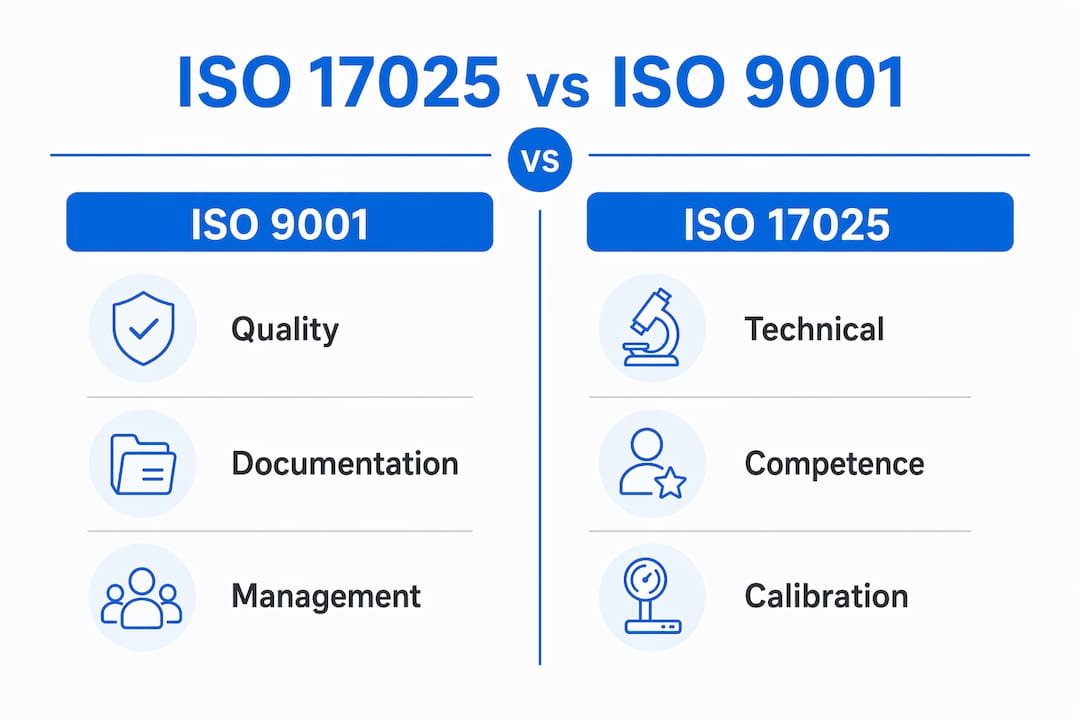
How does 17025 accreditation differ from ISO 9001 certification?

ISO/IEC 17025 certifies technical competence, including validated methods and measurement uncertainty. ISO 9001 certifies only a quality management system. That distinction matters enormously in practice.

ISO 9001 confirms that a laboratory has documented procedures, management reviews, and corrective action processes. It does not confirm that the lab can actually produce accurate, traceable measurements. A facility can hold ISO 9001 certification and still deliver calibration results that are scientifically indefensible. ISO/IEC 17025 closes that gap by requiring proof of technical execution, not just procedural documentation.

Infographic comparing ISO 17025 and ISO 9001 standards

FeatureISO 9001ISO/IEC 17025
FocusQuality management systemTechnical competence
Measurement uncertaintyNot requiredMandatory
Method validationNot requiredRequired within scope
Personnel competenceGeneralDiscipline-specific
International recognitionLimited for calibrationFull, via ILAC MRA
Audit defensibilityModerateHigh

The practical implication for quality managers is direct. When a regulatory body, customer, or auditor requests calibration records, an ISO/IEC 17025 certificate carries far more evidentiary weight than an ISO 9001 certificate from the same lab. The scope of accreditation document that accompanies a 17025 certificate specifies exactly which instruments and parameters the lab is authorized to calibrate. That specificity is what makes the certificate defensible.

Pro Tip: Always request a copy of the calibrating lab’s scope of accreditation before submitting equipment. Confirm your instrument type, measurement parameter, and range appear explicitly in that document. If they do not, the resulting certificate will not satisfy a 17025 requirement.

What practical steps should quality managers take to obtain and maintain accredited calibration?

Achieving and maintaining accreditation under ISO/IEC 17025 follows a defined sequence. Quality managers who treat it as a project with discrete phases avoid the most common compliance failures.

  1. Define your scope. Identify which instruments, parameters, and measurement ranges your lab needs to calibrate. The scope of accreditation is not a blanket authorization. It is a specific list, and every item on it must be supported by validated methods and appropriate reference standards.

  2. Prepare documentation. Establish a quality manual, method procedures, equipment records, and personnel competence files before applying. Assessors from bodies like ANAB or A2LA will review these during the initial assessment. Gaps in documentation are the most common reason for delayed accreditation.

  3. Conduct an internal audit. Run a full internal audit against the ISO/IEC 17025:2017 requirements before the formal assessment. Identify nonconformities and close them with documented corrective actions. This step prevents costly reassessments.

  4. Submit the application and complete the intake process. The intake process for ISO/IEC 17025 calibration includes detailed equipment specifications, scope review, “before” and “after” measurement data with uncertainty, and turnaround time considerations. Provide complete instrument specifications and confirm the lab’s scope covers your equipment.

  5. Undergo the formal assessment. An accreditation body assessor will review your documentation, observe technical work, and interview personnel. Findings are classified as nonconformities or observations. Nonconformities must be resolved before accreditation is granted.

  6. Maintain accreditation through surveillance. Accreditation is not permanent. Labs undergo scheduled surveillance assessments and full reassessments on a defined cycle. Any change to methods, equipment, or personnel must be reported to the accreditation body.

On-site calibration reduces transit delays and risk of damage compared to off-site shipping approaches. For large, fixed, or sensitive equipment, on-site service from an accredited lab is the operationally sound choice.

Pro Tip: Build a calibration schedule that staggers instrument due dates across the year. Sending all critical instruments for calibration at the same time creates production gaps and increases the risk of missing a due date under audit pressure.

Why is 17025 accredited calibration critical for regulatory compliance and audit readiness?

Accredited calibration certificates are preferred or required in regulated industries such as pharmaceuticals, food safety, and environmental monitoring for audit and regulatory compliance. Accredited certificates carry more weight under scrutiny and provide defensible evidence in quality audits. That is not a preference. In many regulatory frameworks, it is a requirement.

The reasons accredited calibration supports audit readiness are specific:

  • International recognition: Certificates from accredited labs are audit-ready and universally defensible through the ILAC Mutual Recognition Arrangement. A certificate issued by an ILAC MRA signatory is accepted by regulatory bodies in over 100 economies.
  • Measurement uncertainty statements: A calibration certificate that includes a full uncertainty budget is a legally recognized document. Auditors and regulators treat it as scientific evidence, not just paperwork.
  • Traceability chain: Accredited certificates document an unbroken traceability chain to SI units. That chain is what regulators in pharmaceutical manufacturing, under FDA 21 CFR Part 11, or in food safety, under ISO 22000, require as proof of measurement integrity.
  • Scope specificity: The scope of accreditation confirms the lab was technically authorized to perform the specific calibration. That authorization is what separates an accredited certificate from a generic calibration report.

“A calibration certificate with measurement uncertainty is a legal document recognized worldwide and required for scientific validity and metrological traceability. Without an uncertainty budget, measurements are not considered scientifically valid or traceable.”
ISO 17025 and 10012: Quality in Metrology, Groupe AFNOR

Labs that use accredited calibration services also strengthen their internal quality assurance programs. When your reference standards are calibrated by an accredited lab, every downstream measurement your team makes inherits that traceability. That inheritance is what makes your own measurement results defensible in an external audit.

Key Takeaways

ISO/IEC 17025 accredited calibration is the only internationally recognized standard that confirms both technical competence and metrological traceability, making it the definitive requirement for audit-ready calibration in regulated industries.

PointDetails
Accreditation confirms technical competenceISO/IEC 17025 verifies validated methods, uncertainty budgets, and personnel qualifications, not just procedures.
Scope of accreditation is bindingAlways confirm your instrument and parameter appear in the lab’s scope document before submitting equipment.
Measurement uncertainty is mandatoryA certificate without an uncertainty budget is not scientifically valid or traceable under ISO/IEC 17025.
Surveillance keeps accreditation currentLabs must pass periodic assessments by bodies like ANAB or A2LA to maintain their accredited status.
Regulated industries require accredited certificatesPharmaceuticals, food safety, and environmental sectors treat accredited calibration certificates as legal evidence in audits.

Why accreditation is a discipline, not a destination

After working with quality systems across manufacturing and laboratory environments, the pattern I see most often is this: labs invest heavily in achieving accreditation, then treat it as finished work. That is the wrong frame entirely.

Accreditation under ISO/IEC 17025 is a discipline that requires the same attention after the certificate arrives as before. Personnel change. Methods drift. Equipment ages. Each of those events is a potential nonconformity if it is not documented and reported to your accreditation body. I have seen labs lose accreditation not because their technical work was poor, but because they failed to notify ANAB of a method change. The technical work was fine. The administrative discipline was not.

The other mistake I see regularly is budget-driven scope creep in reverse. Labs try to get everything accredited to satisfy a general audit requirement, then struggle to maintain competence across an overextended scope. The smarter approach is to prioritize accredited calibration for mission-critical and regulatory-required instruments, and use that focus to keep your documentation tight and your assessments clean.

One more thing worth stating plainly: mixing ISO 9001 certificates with ISO/IEC 17025 certificates in your calibration records is a documentation error that auditors notice immediately. They are different documents with different evidentiary weight. Keep them separate, label them correctly, and train your team on the distinction before the next audit cycle.

— Rachmadi

Precision calibration equipment for ISO/IEC 17025 requirements

Quality managers who need instruments that meet the technical demands of ISO/IEC 17025 accredited calibration will find a broad selection at Multimeter Asia. The catalog covers over 25,000 brands, from temperature transmitter calibrators to electrical testing instruments, all sourced to support the measurement ranges and tolerance levels that accredited labs require.

https://multimeterasia.com

The Fluke Calibration 2562 is one example of a precision instrument built for the exacting requirements of accredited laboratory work, with the measurement accuracy and documentation support that ISO/IEC 17025 compliance demands. Multimeter Asia offers free local delivery, 24/7 support, and 100% secure payments, so quality teams can source the right equipment without delays. Visit the site to review full specifications and confirm the right fit for your accreditation scope.

FAQ

What is ISO/IEC 17025 accredited calibration?

ISO/IEC 17025 accredited calibration is calibration performed by a laboratory that has been formally assessed and approved by an accreditation body, confirming its technical competence, use of validated methods, and metrological traceability to SI units.

How does ISO/IEC 17025 differ from ISO 9001?

ISO/IEC 17025 certifies a lab’s technical competence to perform calibration, including measurement uncertainty and method validation. ISO 9001 certifies only a quality management system and does not confirm scientific accuracy.

What is a scope of accreditation?

A scope of accreditation is a formal document that lists the specific instruments, measurement parameters, and ranges a lab is authorized to calibrate under ISO/IEC 17025. Calibration performed outside that scope does not carry accredited status.

Why do regulated industries require accredited calibration certificates?

Regulated industries such as pharmaceuticals, food safety, and environmental monitoring require accredited calibration certificates because they include measurement uncertainty statements and traceability chains that serve as legally defensible evidence in quality audits.

How often must a lab renew its ISO/IEC 17025 accreditation?

Labs undergo scheduled surveillance assessments and full reassessments on a defined cycle set by their accreditation body, such as ANAB or A2LA. Any significant change to methods, personnel, or equipment must be reported between cycles.

Article generated by BabyLoveGrowth

Posted on

In-Depth Review of the Keysight 16195B Calibration Kit

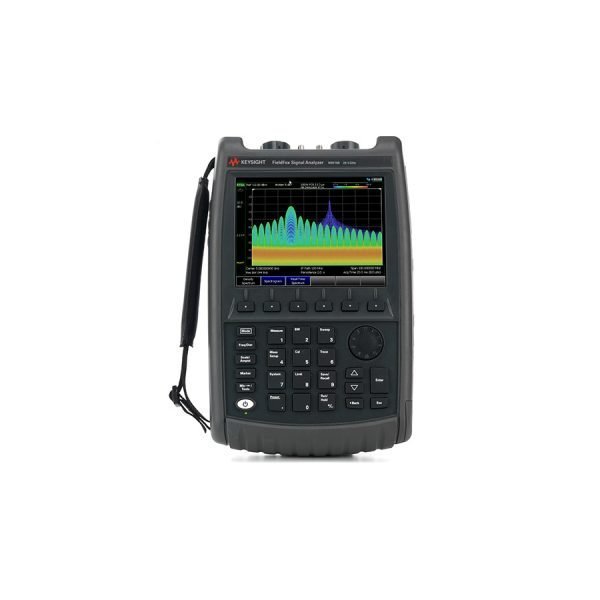
Keysight N9918B FieldFox Handheld Microwave Analyzer

Introduction to the Keysight 16195B

The Keysight 16195B Calibration Kit is an essential tool designed for professionals engaged in precision calibration of LCR meters and impedance analyzers. Calibration is a critical process in ensuring the accuracy and reliability of measurements in various electronic applications. The 16195B kit facilitates this process by providing a comprehensive set of standards that allows for precise calibration, thus ensuring that measurement instruments perform within specified tolerances.

This calibration kit is primarily aimed at engineers, technicians, and researchers who require high accuracy in their testing and measurement processes. The significant advantage of the Keysight 16195B is its ability to cover a wide frequency range, thereby making it versatile for varied applications across industries, including telecommunications, electronics manufacturing, and research and development sectors.

The inherent design of the 16195B kit provides user-friendly features that simplify the calibration process. Equipped with precision passives, this kit supports different configurations, allowing users to adapt it to their specific testing needs. It is also constructed to promote durability and reliability, ensuring that it remains functional over extended periods of regular use. With exceptional performance stability, the Keysight 16195B stands out as a preferred choice for professionals who demand high-quality calibration tools.

Moreover, the calibration kit boasts a compact and organized structure, enabling easy transport and storage. The thoughtful selection of standards in this kit offers a significant level of repeatability and accuracy for measurements, reinforcing its place as a vital resource in ensuring optimal performance of LCR meters and impedance analyzers. In the landscape of electronic measurement, the Keysight 16195B Calibration Kit emerges as a cornerstone for professionals seeking precision and reliability in their instrumentation calibration efforts.

Key Features and Specifications

The Keysight 16195B Calibration Kit is designed for professionals seeking accurate and reliable calibration solutions. It exhibits a wide measurement range, making it a versatile instrument for various applications. This kit is specifically tailored for the verification and calibration of RF and microwave components, ensuring comprehensive coverage across many frequencies. The Keysight 16195B features a frequency range that reaches up to 26.5 GHz, enabling the technician to conduct tests relevant to modern communication systems.

One of the primary attributes of this product is its exceptional accuracy. The calibration kit offers a remarkable precision level, which is critical for any calibration task requiring high fidelity measurements. With a typical measurement uncertainty significantly reduced compared to competing products, users can trust the Keysight 16195B to deliver consistently dependable results. This feature is especially essential in professional settings where minor inaccuracies can lead to significant operational failures.

Another noteworthy aspect is the user-friendly design of the Keysight 16195B. The product incorporates well-defined connections and easy-to-follow operational protocols, allowing both seasoned engineers and less experienced technicians to achieve successful calibration rapidly. Moreover, its durable construction ensures that the kit can withstand the rigors of frequent use, which is vital for sustained productivity.

In the context of its capabilities, it is essential to highlight the superior calibration capabilities of the kit, which include high-level linearity and temperature stability. These attributes make the Keysight 16195B suitable for precise measurements in varying environmental conditions. For professionals seeking a robust, high-performance calibration solution, the Keysight 16195B Calibration Kit stands out as a superior choice, making it an indispensable tool in the arsenal of quality assurance specialists.

Performance Analysis

The Keysight 16195B Calibration Kit has garnered significant attention in the calibration equipment marketplace, due to its impressive performance metrics. An essential factor in evaluating this product is its accuracy. The 16195B boasts an accuracy range that aligns with the rigorous demands of industry standards. Users have reported consistent results across various testing scenarios, indicating that the calibration results are reliable and reproducible, a crucial aspect for professional applications.

Reliability is another cornerstone of the Keysight 16195B’s performance. This calibration kit has been designed to withstand the rigors of daily use in a laboratory setting, making it suitable for both field and bench testing. User feedback highlights its robust construction and the longevity of its components, which supports operational uptime and minimizes the need for frequent replacements. This reliability factor sets it apart from competing models, whose quality may falter with extensive usage.

When comparing the Keysight 16195B with other calibration kits in its class, several strengths become evident. For instance, its ease of use is often highlighted in user reviews. The intuitive design and clear instructions enhance the user experience, as professionals can seamlessly integrate the kit into their workflow without extensive training. However, some competitors may offer additional features, such as enhanced software capabilities or broader frequency ranges. This comparison suggests that while the 16195B excels in core performance metrics such as accuracy and reliability, potential users should also consider their specific needs when selecting a calibration kit.

In conclusion, the Keysight 16195B Calibration Kit stands out due to its accuracy and reliability, corroborated by positive user feedback and comparative analysis with similar products. Those seeking a dependable calibration solution can find confidence in the strengths of the Keysight 16195B while also weighing it against alternative options based on individual requirements and preferences.

Ease of Use and Setup

The Keysight 16195B Calibration Kit is designed with user convenience in mind, providing a straightforward installation and operation process. Upon unboxing the kit, users will find a well-organized arrangement of components, which contributes to a smooth initial setup phase. The comprehensive user manual included with the kit serves as a valuable resource, guiding first-time users through the installation process step-by-step. Users have reported that following these instructions allows for an efficient setup, minimizing the potential for errors.

The user interface of the Keysight 16195B is intuitive, making it accessible for both new and experienced users. The front panel includes clearly labeled buttons and a digital display that allows for easy navigation through various settings and functions. This thoughtful design helps users quickly familiarize themselves with the calibration process, reducing the learning curve often associated with more complex instruments. The interface supports direct access to essential features, ensuring that users can execute calibrations without excessive complications.

In conclusion, the Keysight 16195B Calibration Kit offers a user-friendly experience that simplifies both the setup and operational processes. Its intuitive interface and effective user manual collaborate to ensure that even those who are new to calibration can utilize the kit efficiently, making it a favorable option for a wide range of users.

Applications and Use Cases

The Keysight 16195B Calibration Kit has gained substantial acknowledgment across various industries due to its excellent calibrating capabilities, ensuring precision in measurements. One primary application of this calibration kit is in the telecommunications industry, where signal integrity is paramount. The accurate calibration of RF devices is critical for maintaining signal quality, reducing distortion, and enhancing the overall performance of communication networks. Thanks to the Keysight 16195B, engineers can effectively calibrate their equipment, ensuring compliance with industry standards.

In the electronics and semiconductor manufacturing sectors, precision is similarly vital. The Keysight 16195B is employed extensively to calibrate measurement equipment used in the design and production phases. By ensuring the accuracy of testing machinery, engineers can identify any defects in components, ultimately contributing to improved yield and reliability. Industries that rely on stringent quality control systems appreciate the integration of the Keysight 16195B in their calibration processes.

Moreover, the aerospace and defense sectors utilize the Keysight 16195B for the calibration of sophisticated instruments responsible for avionics and communication systems. The precision offered by this calibration kit directly impacts mission-critical operations. Accurate calibrations lead to enhanced system reliability and safety, making the Keysight 16195B an invaluable tool for maintaining compliance with regulatory requirements.

In the realm of research and development, the versatility of the Keysight 16195B allows scientists and engineers to perform precision measurements across various parameters. This adaptability supports innovations in emerging technologies such as 5G and Internet of Things (IoT) deployments. By employing the Keysight 16195B, research teams can ensure that prototypes and devices are calibrated correctly, promoting reliability in their experiments and leading to successful product outcomes.

Ultimately, the diverse applications of the Keysight 16195B Calibration Kit underscore its significance in maintaining high standards across multiple industries, making it an essential tool for professionals who prioritize precision and accuracy.

Comparison with Other Calibration Kits

The Keysight 16195B Calibration Kit stands out in a market filled with various alternatives, each offering unique features and capabilities. To better understand its position, we will compare it with other popular calibration kits available today, focusing on aspects such as pricing, performance, and overall suitability for different tasks.

In the realm of pricing, the Keysight 16195B is typically positioned in the mid to high range. While initially appearing more expensive than some competitors, this calibration kit justifies its cost through its superior accuracy and build quality. For instance, kits like the Tektronix TCA-1 are more budget-friendly but may not deliver the same level of precision in professional settings. Therefore, the choice between these kits often boils down to the user’s specific requirements, balancing their budget constraints against the need for high performance.

Performance-wise, the Keysight 16195B excels in providing precise and repeatable calibration results. It is specifically designed for high-frequency applications, making it a favorable choice for engineers working in RF and microwave domains. In contrast, other kits such as the Anritsu MA24108A may offer adequate performance for basic tasks but fall short in terms of frequency range and accuracy. Consequently, for users engaged in high-stakes projects, investing in a product review for Keysight 16195B may yield better long-term value.

When assessing features, the Keysight 16195B includes comprehensive documentation and a user-friendly design that facilitates ease of use. Furthermore, its compatibility with a wide range of test equipment is a significant advantage. In comparison, some other options might lack detailed manuals or customizable features, making the Keysight 16195B a more suitable choice for professionals seeking reliability and versatility.

Overall, while there are several calibration kits available, the Keysight 16195B distinguishes itself through its blend of pricing, performance, and essential features, making it an excellent option for both seasoned professionals and newcomers alike in the calibration market.

Customer Testimonials and Reviews

The Keysight 16195B Calibration Kit has garnered considerable attention from users across various sectors, particularly in the fields of electronics and telecommunications. Many customers have taken the time to share their experiences, highlighting both the strengths and areas for improvement of the product.

One frequent point of praise is the kit’s comprehensive nature, as it includes everything necessary for accurate calibration of network analyzers. Users have noted that the included calibration standards cover a wide frequency range, making the Keysight 16195B exceptionally versatile for different applications. A telecommunications engineer stated, “This kit has improved my workflow significantly. The accuracy and ease of use make a huge difference in my testing processes.”

Additionally, a number of customers have highlighted the durability of the components. They appreciate that the materials used are of high quality, which contributes to the longevity of the kit. A technician from a defense contractor mentioned, “I’ve used other calibration kits in the past, but the Keysight 16195B stands out thanks to its sturdiness and reliability during fieldwork.” The positive reception regarding its construction indicates that it can withstand rigorous use in demanding environments.

On the other hand, some users have pointed out the price point as a potential drawback. While many agree that the performance justifies the cost, a few have expressed that budget-conscious buyers may find the investment challenging. A project manager remarked, “Though it’s premium priced, the calibration results are unmatched. For serious professionals, it’s worth every penny.” These varied perspectives provide potential buyers with a rounded view of the product.

Overall, the feedback surrounding the Keysight 16195B reflects a high level of user satisfaction. The product review for Keysight 16195B showcases both its strengths and areas that potential buyers may want to consider, enabling informed decision-making for those looking to invest in reliable calibration equipment.

Price and Value for Money

The Keysight 16195B Calibration Kit is positioned in the market as a high-quality offering, and its price reflects the comprehensive features it provides. Generally, pricing for the Keysight 16195B ranges on the higher side when compared with similar calibration kits available from competitors. However, it is essential to contextualize this price against the exceptional performance and reliability that this kit offers. The initial investment might appear steep, but for professionals who require precision and consistency, the value for money becomes evident.

The calibration kit includes a range of essential components designed to meet stringent industry standards, ensuring accuracy in various calibration tasks. Users frequently cite the kit’s robustness, ease of use, and the detailed documentation provided, contributing to an overall positive experience. When analyzing the pricing structure, it is beneficial to consider not solely the purchase price but also the longevity and reliability that the Keysight 16195B calibration kit promises. This longevity can significantly reduce the overall cost of ownership over time.

In comparison to its competitors, the Keysight 16195B provides a solid balance between performance and value. Many alternative calibration kits may tempt buyers with lower price points; however, they often lack the advanced features and reliable results that Keysight products are known for. This distinction is crucial for professionals who depend on precise calibration to maintain the integrity of their work. In essence, while the Keysight 16195B may demand a higher initial expenditure, it justifies this cost through the superior quality of service delivered, thereby presenting itself as a worthy investment for those seeking long-term benefits in their calibration needs.

Where to Buy the Keysight 16195B

When considering the purchase of the Keysight 16195B Calibration Kit, potential buyers have several reliable options to explore. The official Keysight website serves as a primary purchasing avenue, providing users with a direct link to buy the product securely. Through their online store, customers can ensure they are obtaining an authentic product along with access to pertinent product documentation and specifications. Additionally, visiting the Keysight online platform allows users to take advantage of any promotional offers or discounts that may be available at the time of purchase.

Aside from the official website, various reputable electronics retailers and distributors also stock the Keysight 16195B. These include well-known suppliers like Digi-Key, Mouser Electronics, and Newark. These platforms often come with user-friendly interfaces, allowing customers to quickly locate the calibration kit and assess pricing and availability. Moreover, if immediate purchase options are vital, local electronics supply stores might also carry this specific kit, providing an opportunity for direct customer service and support.

When purchasing the Keysight 16195B, potential buyers should check for warranties offered by the retailer. Typically, Keysight products come with a limited warranty, which can vary between distributors. Understanding the warranty conditions will provide assurance that the product is protected against defects or malfunctions. Furthermore, it is advisable to review the return policy of the retailer to understand the guidelines for returning or exchanging the kit should it not meet expectations.

In conclusion, securing the Keysight 16195B Calibration Kit can be achieved through various trusted channels, ensuring customers can find the best option that suits their needs while understanding the associated warranty and return policies for a satisfactory buying experience.

Link to Buy

[Here]