A megger tester is defined as an insulation resistance tester that applies a high DC voltage across electrical insulation to measure its resistance in megohms or teraohms. Electrical engineers and technicians rely on the megohmmeter, the recognized industry term for this instrument, to verify that cables, motors, transformers, and switchgear meet the insulation integrity thresholds required by IEC 61010 and related safety standards. A failed insulation test is one of the clearest early warnings of equipment degradation, making the megger insulation tester one of the most consequential instruments in any electrical maintenance program. Selecting the right model, understanding its safety ratings, and applying correct test procedures directly determines the accuracy of your electrical safety assessments.
What are the main types and voltage ranges of megger testers?
Megger insulation testers fall into three practical categories based on test voltage output, and each category targets a distinct application context.
Entry-level models cover test voltages from 10V to 1000V. The MIT400/2 series, for example, measures resistance up to 200 GΩ and operates between -20°C and +55°C. These handheld units use impact-resistant ABS housing and run on batteries, making them the standard choice for routine site inspections, domestic wiring checks, and low-voltage motor testing.
Intermediate models step up to 2500V output. The MIT2500 series operates at voltages exceeding 1000V and includes a digital display with a guard terminal that reduces surface leakage errors during measurement. This category suits medium-voltage cable testing and industrial motor assessments where higher test voltages are needed to stress-test thicker insulation.
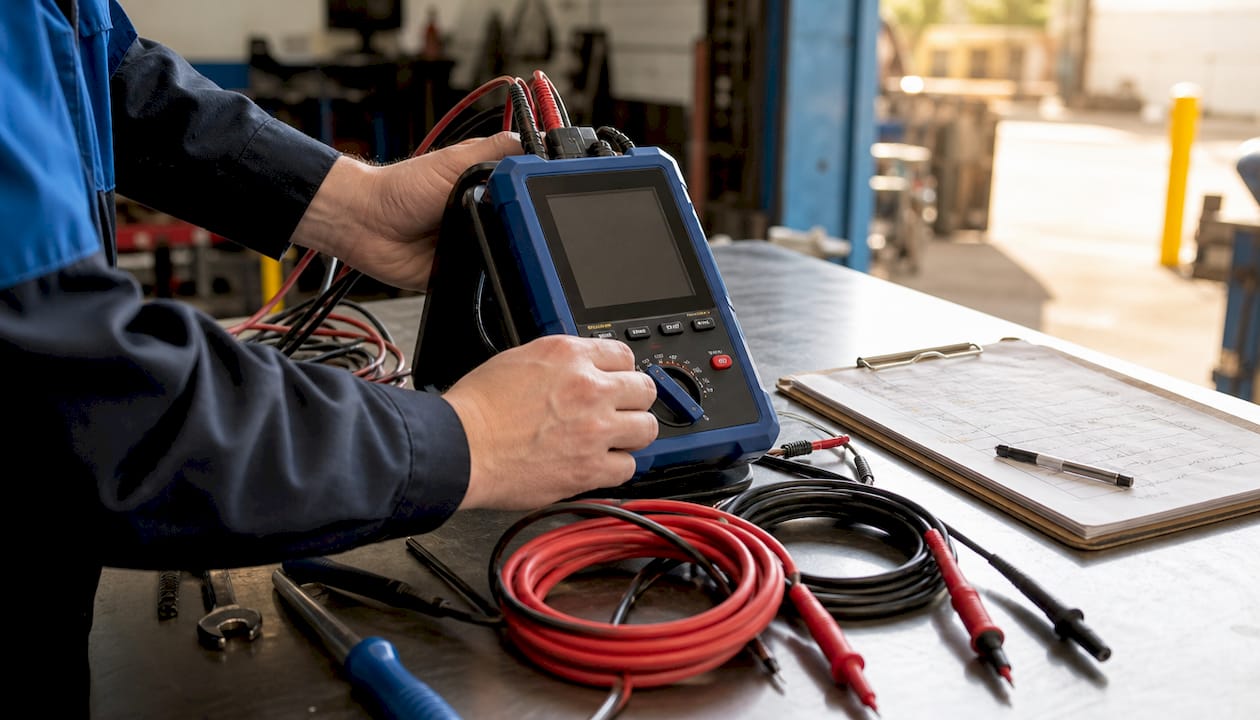
Advanced models reach 10,000V output. The MIT1025, for instance, measures resistance up to 20 TΩ and supports both battery and mains operation. At approximately 4.5 kg, it is a bench-capable instrument designed for high-power transformer testing, generator windings, and substation cable assessments.
| Category | Test voltage range | Max resistance | Typical application |
|---|---|---|---|
| Entry-level | 10V–1000V | 200 GΩ | Routine site inspections, domestic wiring |
| Intermediate | 50V–2500V | 200 GΩ | Medium-voltage cables, industrial motors |
| Advanced | 500V–10,000V | 20 TΩ | Transformers, generators, substations |
Power source choice matters in the field. Battery-only units offer full portability for confined-space or rooftop work. Dual-source models like the MIT1025 allow mains operation during extended laboratory-style testing sessions, which preserves battery life and maintains output voltage stability under continuous load.
Which critical safety standards must you look for in an insulation tester?
Safety ratings are not optional specifications. They define whether a device protects you in the environment where you actually work.
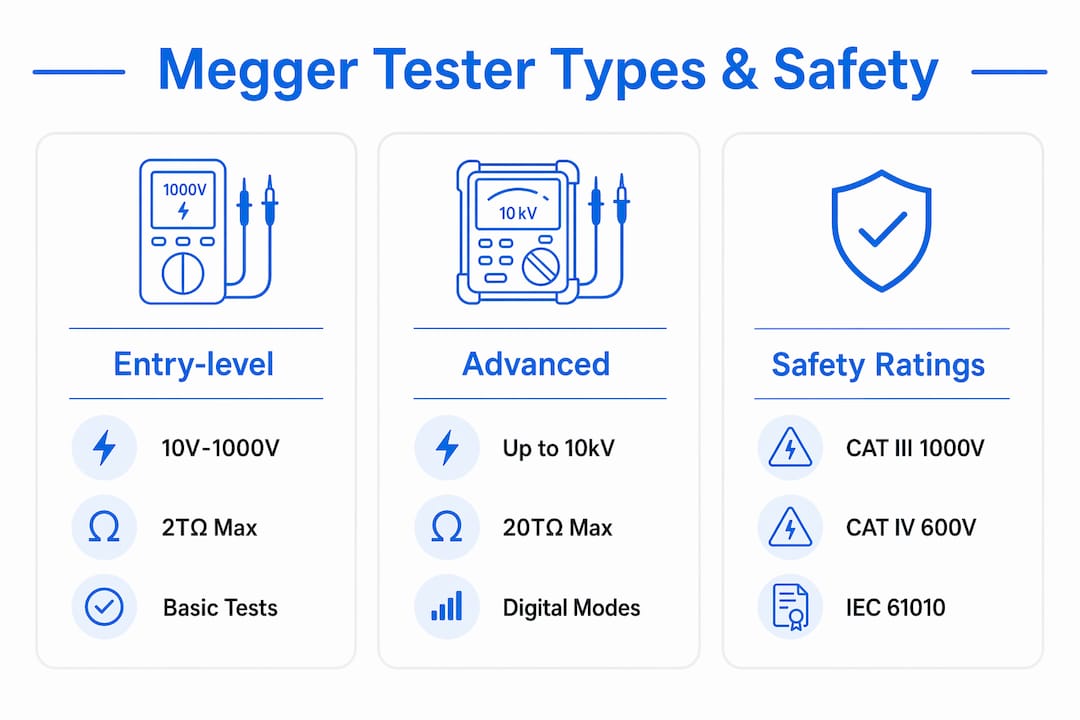
The most critical rating is CAT IV 600V. All insulation tester tiers from entry-level to expert-grade must carry this rating for live-environment testing. CAT IV covers measurements at the origin of low-voltage installations, including utility service entrances and outdoor conductors. Using a CAT III device in a CAT IV environment creates a genuine arc-flash and shock risk.
Key safety and environmental features to verify before purchase:
- IEC 61010 compliance: The governing standard for electrical measurement equipment safety. Confirms the device meets defined overvoltage and insulation requirements.
- IEC 61326 compliance: Covers electromagnetic compatibility, confirming the tester produces accurate readings in environments with electrical noise.
- IP65 ingress protection: Dust-tight and water-resistant construction for reliable field use in rain, dust, and industrial spray environments.
- Operating temperature range: Most industrial-grade megohmmeters operate from -20°C to +55°C, covering outdoor winter conditions and hot electrical rooms.
- Noise immunity: Expert-grade models include adaptive filters that suppress interference from adjacent live conductors, which is critical in substations.
Pro Tip: Always match the CAT rating to your specific test environment, not just the nominal voltage. A substation service entrance requires CAT IV even if the measured voltage is only 400V.
How do advanced features like Bluetooth and diagnostic modes improve utility?
Modern insulation resistance testers do far more than return a single resistance value. Advanced diagnostic modes convert a pass/fail instrument into a predictive maintenance tool.
Polarization Index (PI): Compares the 10-minute resistance reading to the 1-minute reading. A PI below 2.0 on a motor winding typically indicates moisture contamination or aging insulation. This ratio reveals trends that a single-point reading cannot.
Dielectric Absorption Ratio (DAR): Compares the 60-second to the 30-second reading. DAR provides a faster version of the PI test for situations where a full 10-minute test is impractical.
RE>Act diagnostic mode: Advanced diagnostic features like RE>Act analyze resistance trends during the test period to predict long-term insulation health. This goes beyond a snapshot measurement and gives you a trajectory.
Bluetooth connectivity: The MIT2500 series supports wireless data transfer up to 10 meters to a PC or tablet. This eliminates manual transcription errors and allows test records to feed directly into maintenance management systems.
Noise immunity up to 8 mA: Expert-grade models filter interference from adjacent energized conductors. This feature is not a luxury in active substations. Without it, noise can inflate resistance readings and produce false-pass results.
Pro Tip: When testing in a live substation, activate the noise immunity filter before recording any reading. An unfiltered reading in a high-interference environment can be off by an order of magnitude.
The Megger 210415 insulation tester available at Multimeter Asia combines several of these diagnostic modes in a field-ready package, making it a practical choice for engineers who need more than basic resistance values.
What are the best practices for insulation resistance testing?
Correct procedure protects both the operator and the equipment under test. Skipping any step introduces measurement error or safety risk.
De-energize and discharge the circuit. Confirm the circuit is isolated using a voltage tester. Discharge capacitive equipment fully before connecting the megohmmeter. Residual charge can damage the tester and produce erratic readings.
Verify tester calibration. Routine calibration against IEC standards confirms measurement accuracy. Check the calibration date on the instrument label before starting any test. An out-of-calibration device produces data that cannot be used for compliance records.
Select the correct test voltage. Match test voltage to the rated voltage of the equipment. A 400V motor typically requires a 500V test. A 6.6 kV cable requires at least 5,000V. Applying too low a voltage under-stresses the insulation and misses developing faults.
Connect the guard terminal when available. The guard terminal routes surface leakage current away from the measurement circuit. On contaminated or humid cable surfaces, surface leakage can be orders of magnitude lower than true insulation resistance. Ignoring the guard terminal produces falsely low readings.
Apply the test voltage and record at defined intervals. Standard procedure involves recording resistance at 30 seconds, 60 seconds, and 10 minutes for PI calculation. Allow the reading to stabilize before noting the value.
Discharge the test object after measurement. High-voltage testers charge capacitive equipment during the test. Discharge through the tester’s built-in discharge function or a resistive discharge lead before disconnecting test leads.
Interpret results against published standards. A resistance below 1 MΩ on a low-voltage motor winding is a clear failure. For medium-voltage equipment, minimum acceptable values depend on voltage class and equipment age. Compare results to the manufacturer’s specification and to previous test records to identify trends.
The Megger DET4TD2 supports both insulation resistance and continuity testing in a single instrument, which reduces the number of tools needed on complex commissioning jobs.
Key Takeaways
A megger tester’s value depends entirely on matching its voltage range, safety rating, and diagnostic capabilities to the specific electrical environment and equipment under test.
| Point | Details |
|---|---|
| Match voltage to equipment rating | Select test voltage based on the rated voltage of the equipment, not convenience. |
| CAT IV 600V is non-negotiable | Any insulation tester used in live industrial environments must carry a CAT IV 600V rating. |
| Diagnostic modes add predictive value | PI, DAR, and RE>Act modes reveal insulation trends that single-point readings miss entirely. |
| Calibration determines data validity | An out-of-calibration tester produces records that cannot support IEC compliance documentation. |
| IP65 and temperature range matter in the field | Verify ingress protection and operating temperature before deploying any tester outdoors or in industrial environments. |
What I’ve learned from years of insulation testing in the field
The most common mistake I see electrical professionals make is selecting a tester based on price tier rather than application requirements. An entry-level unit rated to 1000V is entirely adequate for domestic wiring. That same unit is the wrong tool for a 3.3 kV motor in a petrochemical plant, regardless of how well it is built.
The second issue is treating calibration as an administrative task rather than a technical one. I have seen test records invalidated during audits because the instrument was six months past its calibration due date. The reading may have been accurate. Without a current calibration certificate, you cannot prove it. Multimeter Asia stocks instruments with traceable calibration documentation, which removes that compliance risk from the start.
The advancement I find most practically significant is Bluetooth data transfer combined with PI and DAR diagnostic modes. These two features together shift insulation testing from a reactive check to a predictive maintenance input. When you can log resistance trends over multiple test cycles and transfer them wirelessly to a maintenance database, you build an insulation health history that supports informed replacement decisions before failures occur.
Selection should also account for the noise environment. Expert-grade models with adaptive interference filters produce reliable readings in active substations where entry-level units return unstable values. Paying for that capability only makes sense if your work regularly takes you into high-interference environments. Know your job scope before specifying the instrument.
— Rachmadi
Precision insulation testers available at Multimeter Asia
Multimeter Asia carries a full range of Megger insulation testers and megohmmeters suited to every application tier, from routine site inspections to high-voltage substation assessments. Each instrument is sourced from verified manufacturers and comes with the documentation electrical professionals need for IEC compliance records.
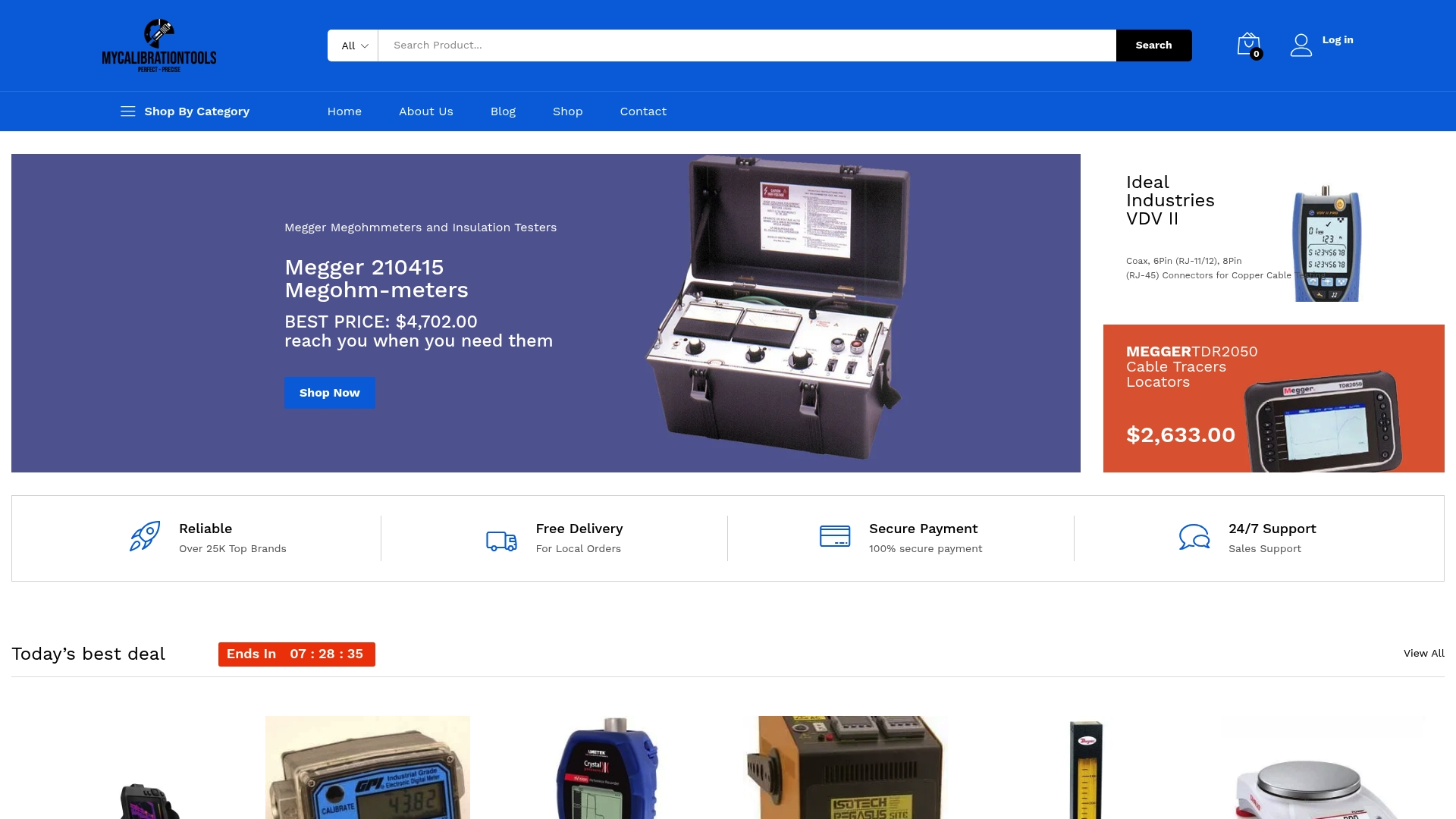
The catalog at Multimeter Asia includes over 25,000 products across electrical testing, calibration, and thermal imaging categories, with free local delivery, 100% secure payments, and 24/7 technical support. Whether you need an entry-level handheld unit or an advanced dual-source tester with full diagnostic capability, the selection covers the full specification range that field engineers and maintenance technicians require.
FAQ
What is a megger tester used for?
A megger tester measures the insulation resistance of electrical equipment, including cables, motors, and transformers, to verify that insulation integrity meets safety and compliance thresholds. It applies a high DC voltage and measures the resulting resistance in megohms or teraohms.
What voltage should I use for insulation resistance testing?
Test voltage should match the rated voltage of the equipment under test. A 400V motor typically requires a 500V test voltage, while medium-voltage cables rated at 6.6 kV require at least 5,000V to adequately stress the insulation.
What does a CAT IV 600V rating mean on an insulation tester?
CAT IV 600V is the highest measurement category defined by IEC 61010 and covers testing at the origin of low-voltage installations, including utility service entrances. All professional-grade insulation testers used in live industrial environments must carry this rating.
What is the Polarization Index and why does it matter?
The Polarization Index compares the 10-minute insulation resistance reading to the 1-minute reading. A PI below 2.0 on a motor winding typically indicates moisture or insulation degradation, making it a key diagnostic metric for predictive maintenance programs.
How often should a megger insulation tester be calibrated?
Calibration frequency depends on the manufacturer’s specification and the applicable IEC standard, but annual calibration is the common industry baseline. Instruments used in compliance-critical environments should carry a current traceable calibration certificate to support audit documentation.
Recommended
- Megger DET4TD2: Advanced Insulation and Continuity Tester for Electrical Professionals – Multimeter Asia
- Megger 210415: The Ultimate Insulation Tester for Electrical Safety and Reliability – Multimeter Asia
- Gossen Metrawatt PROFITEST MTECH: The Ultimate Electrical Testing Solution for Professionals – Multimeter Asia
- Fluke 810/+TRNG – Multimeter Asia
Article generated by BabyLoveGrowth